
On October 13–14, 2025, The American College of Greece (ACG) participated in The Economist’s 9th Sustainability Summit for South-East Europe & the Mediterranean, held at the Divani Apollon Palace & Thalasso, Kavouri.
Amid a rapidly changing global landscape — marked by climate policy pushback, geopolitical rivalries, and questions about the future of international cooperation — this year’s summit, themed “Seeking a new balance amidst a derailed green transition,” brought together global leaders, academics, and policymakers to explore how innovation, responsibility, and collaboration can sustain the momentum toward a greener and more equitable future.
Education as the Catalyst for Change
Dr. Stella Apostolaki, Executive Director of the Center of Excellence in Sustainability at The American College of Greece, brought to the fore the transformative power of education during the panel “Why education and training are essential for corporate sustainability.” She spoke about the central role of learning in driving sustainable transformation — not only by equipping future leaders with the right knowledge, but by cultivating mindsets that embrace long-term responsibility and systemic change.
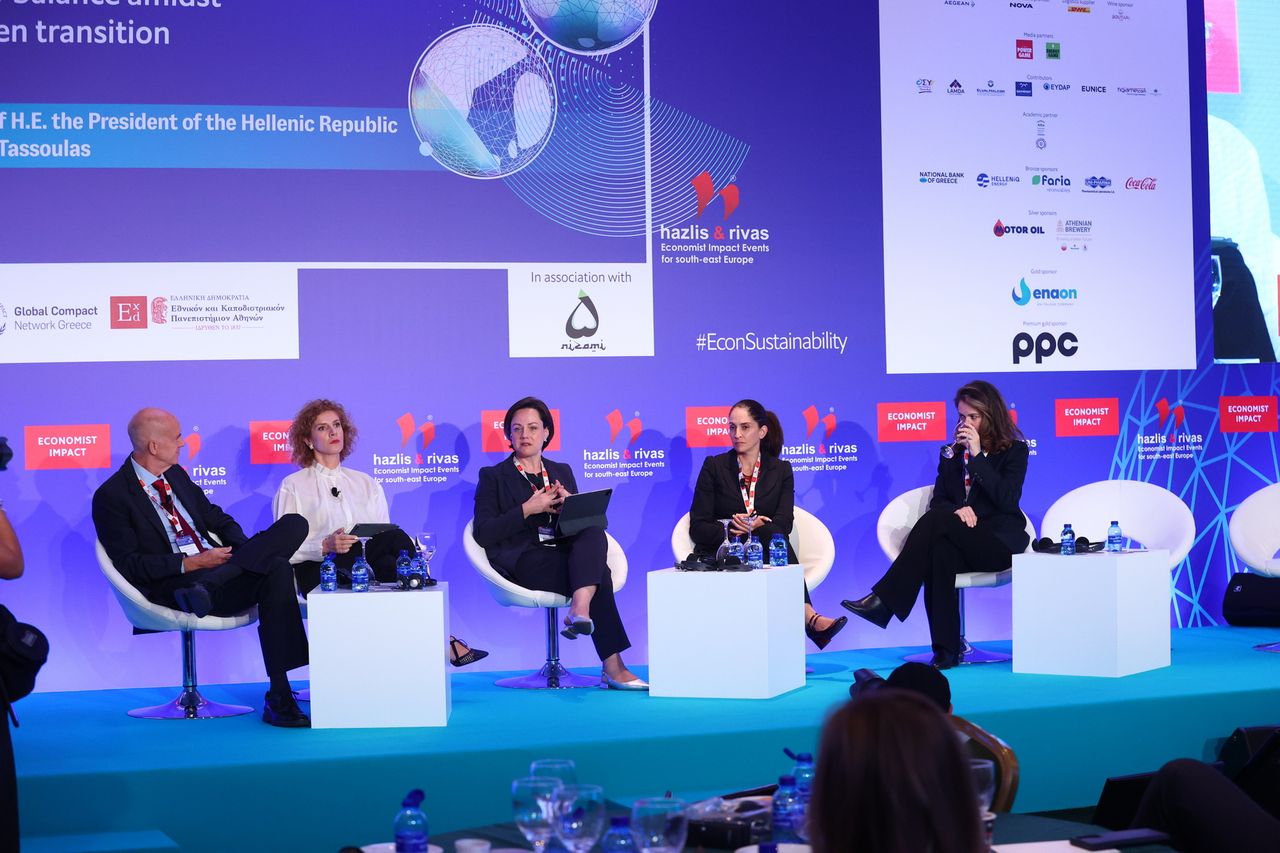
Drawing on ACG’s active engagement in the Erasmus+ “SDG4U” project, she illustrated how universities can serve as powerful catalysts for sustainability by aligning their strategies with the United Nations Sustainable Development Goals (UN SDGs). From embedding sustainability into curricula to fostering innovation, community engagement, and environmentally responsible operations, she emphasized that institutions of learning can inspire society by example.
“Education is the foundation of sustainability,” Dr. Apostolaki shared. “When knowledge becomes action, universities can lead not only in teaching but in transforming how the world approaches responsibility.”
Her remarks reflected ACG’s enduring commitment to integrating sustainability into every level of academic and institutional life — turning vision into impact.
Watch the panel discussion below:
Unpacking the Truth Behind the ‘Conscious Consumer’
In another compelling session, Professor Pavlos A. Vlachos, Associate Professor of Marketing at Alba Graduate Business School, The American College of Greece, explored how perceptions, biases, and psychology shape consumer choices in the panel “Sustainability and Social Responsibility: The Role of the Conscious Consumer.”
Professor Vlachos challenged one of the most persistent assumptions in sustainability: that consumers consistently act according to their stated values. He shared insights from his research in consumer psychology and Corporate Social Responsibility (CSR), highlighting how emotions, social expectations, and self-image often drive purchasing decisions more than ethics alone.
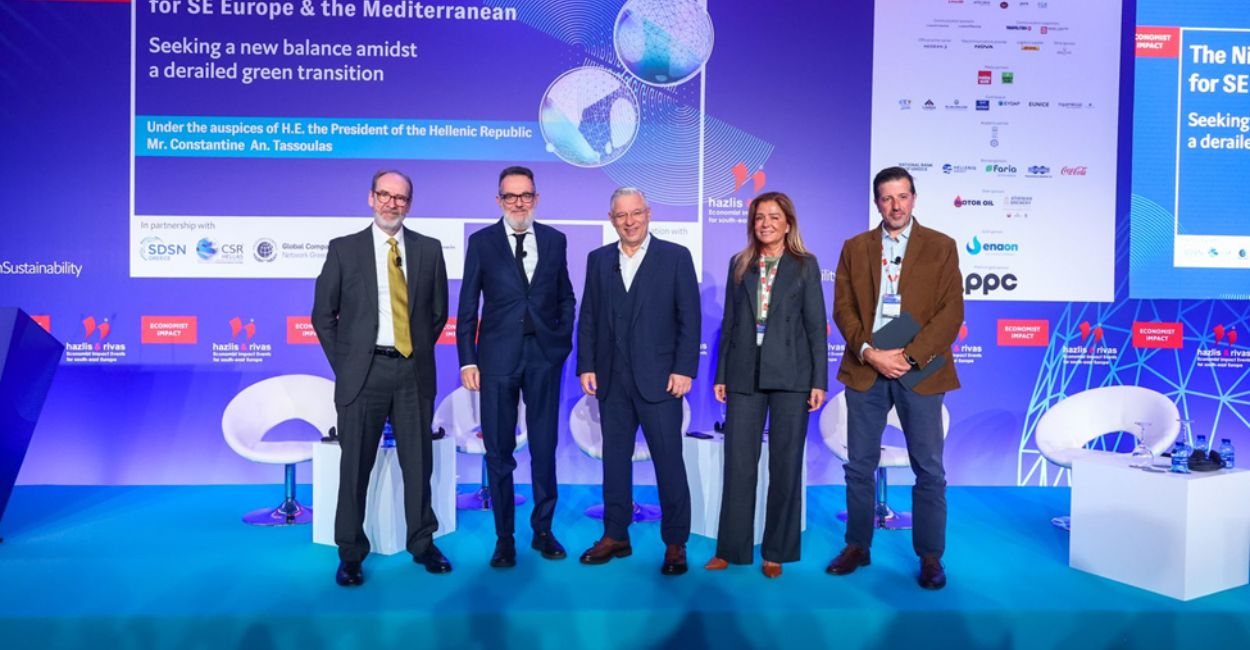
“People want to see themselves as responsible consumers,” he noted, “but awareness alone rarely leads to change. Understanding what truly motivates behavior is key to making sustainability real.”
He also discussed the importance of authenticity in corporate communication, warning that sustainability efforts can lose credibility if they are perceived as self-promotional. His message resonated deeply: the path toward meaningful change lies not just in what organizations say, but in how genuinely they act.
Watch the panel discussion below:
ACG’s Continuing Commitment to a Sustainable Future
ACG’s participation in The Economist’s Sustainability Summit once again demonstrated the College’s leadership in advancing sustainability across education, business, and community impact. Through its initiatives, ACG continues to empower informed, ethical, and forward-thinking citizens and professionals.
At ACG, sustainability is not a trend or a talking point — it is a shared commitment that shapes how we learn, teach, and lead. It is how we help build a future defined not only by innovation, but by responsibility.