
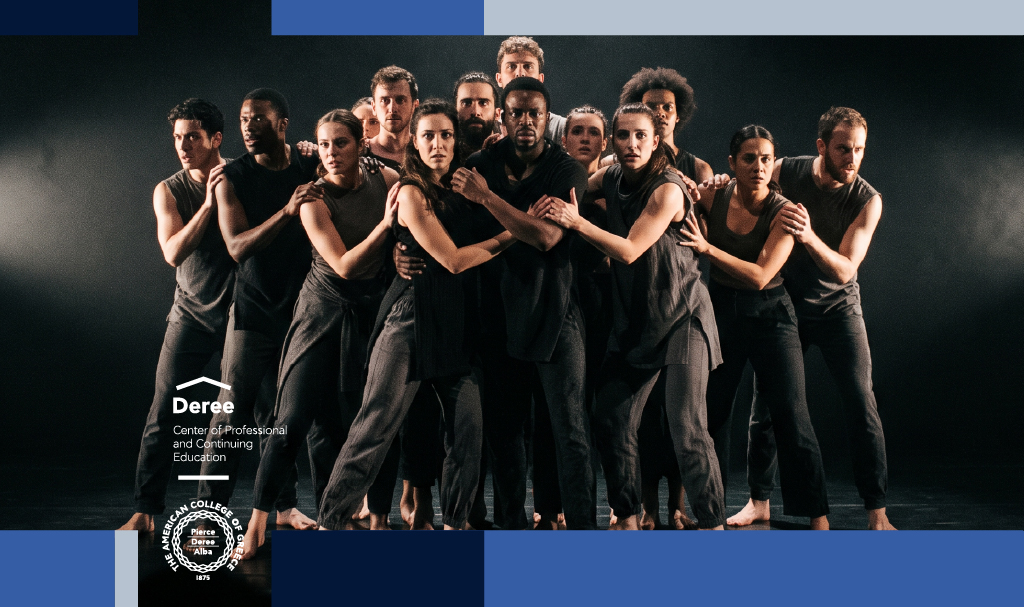
When: May 4 – 8, 2026 / weekdays, 9:00-16:00
Where: Deree – The American College of Greece, Aghia Paraskevi Campus (6 Gravias Street, 153 42 Aghia Paraskevi)
Language of Instruction: English
Audience: By registration only
Registration Deadline: May 3, 2026

Overview
In collaboration with the London Academy of Music and Dramatic Art (LAMDA), the Frances Rich School of Arts, Humanities & Social Sciences of Deree – The American College of Greece offers this intensive workshop, which combines lectures, practical classes, and masterclasses, and culminates in a sharing of work to an invited audience, followed by a keynote lecture, bringing the week to a close with both artistic celebration and intellectual reflection.
May 4
10:00 – 12:00
Introduction to the course and the text.
13:00 – 16:00
LAMDA Faculty: Practical Classes
Oliver Birch, LAMDA’s Assistant Professor and Course Leader MA/MFA Classical Acting, will deliver a three-hour class, The Emotive Function of Music, to investigate how music operates as a dramatic and expressive force within choral performance, and how sound, breath, and voice can generate and sustain collective dramatic life. Posing the question of whether music can definitively conjure a particular emotion — or whether that response is shaped by culture and context — the session moves from vocal and physical warm-up through a structured exploration of musical structures including harmony, dissonance, drone, and counterpoint. Working in groups, participants will apply these tools in a devising session using the opening chorus speech of Ted Hughes’ Agamemnon, before sharing and reflecting on how music can bolster, disrupt, or transform the emotional life of a text.
May 5
9:00 – 12:00
LAMDA Faculty: Practical Classes
George Ryan, LAMDA’s Assistant Professor and Head of Voice, will lead a three-hour class on Unison Speaking, unpacking the technical and expressive demands of performing text as a collective. Beginning with a vocal warm-up, the session moves through a series of exercises examining the core elements, challenges, and demands of choral unison speaking, before turning to the craft of building vocal soundscapes drawn from the opening chorus speech of Ted Hughes’ Agamemnon. The class asks what it truly means for a chorus to speak, think, and feel as one — and gives participants the practical tools to begin answering that question together.
13:00 – 15:00
Savvas Stroubos Lecture -Demonstration:
Chorus and Community in the Oresteia by Theodoros Terzopoulos.
The Oresteia, directed by Theodoros Terzopoulos, marked the first collaboration between the internationally acclaimed Greek director and teacher and the National Theatre of Greece, and has been a milestone in the recent history of theatre in Greece. Following its premiere in the Ancient Theatre of Epidaurus in 2024 and a triumphant international run, the performance returned to the Ancient Theatre of Epidaurus in 2025 to complete the year’s festival season at Epidaurus. This landmark production of the Oresteia is regarded as a historical point of reference for the performance of ancient tragedy, and for its exemplary restoration of the role and function of the chorus
Performers led by the Associate Director Savvas Stroumpos will offer a lecture-demonstration. The session will be led by Savvas Stroumpos, who has collaborated permanently with Theodoros Terzopoulos since 2003 and serves as the main instructor of Terzopoulos’ Method “The Return of Dionysus.”
May 6, 9:00 – 12:00 & 13:00 – 16:00
MFA Graduate Masterclasses
Delivered by recent graduates of LAMDA’s MFA Classical Acting programme, these sessions offer hands-on exploration of ensemble and chorus across a range of disciplines and approaches.
Anna Johnston and Megan Greenwood each bring a distinct lens to movement-based ensemble devising, both rooted in the Viewpoints practice developed by Anne Bogart and Tina Landau. Their sessions run in parallel and are conceived as two sides of the same inquiry. Anna introduces Frantic Assembly’s Round-By-Through exercise — a partner and small-group devising method that generates powerful physical storytelling — while layering in Viewpoints of Time to deepen participants’ sensitivity to duration, tempo, and kinesthetic response. Megan’s class takes a broader ensemble lens, guiding participants through a structured Viewpoints exploration of space, shape, topography, and collective impulse, before moving into group composition in response to images and themes drawn from the Hughes text. Together, the two sessions form a sustained investigation into how bodies in space can tell a story that no single performer could tell alone.
Adam Sanderson’s masterclass, Folk Dance as Ensemble Performance, investigates how traditional choreographic forms can serve as a vehicle for acting intention and collective storytelling. Working with the Hasapiko and Hasaposerviko — forms rooted in Greek folk tradition — participants will explore how set movement can be activated through playable actions, and how the ensemble dynamics inherent in folk dance translate into powerful theatrical expression. Sanderson brings over a decade of competitive Greek folk dance experience alongside his training in Active Analysis, and his practice sits at a compelling intersection of cultural form and dramatic embodiment. His Greek heritage gives him an informed and nuanced relationship to this material, underpinned by a rigorous approach to performance.
Sol Alberman brings together post-Lecoq clowning and Goat Island’s creative response methods in Clown vs Chorus. Framing the clown’s impossible task as a mirror for the tragic hero’s aporia, the session moves through a series of escalating ensemble exercises to interrogate the shifting relationship between performer, chorus, and audience — and to ask what ancient Greek theatre might look like if we approach it through the most personal human mask we have.
May 7
10:00 – 11:00
International Perspective: Zoom Presentation
Frank Behnke, Schauspieldirektor at the Staatstheater Meiningen, Germany will join us digitally to discuss his directorial approach to the chorus in the Oresteia, bringing a contemporary European perspective on how this ancient theatrical form speaks to today’s audiences and ensembles. Thanos Vovolis, Scenographer and Costume designer and Programme Coordinator for the Theatre Arts introduces the guest speaker.
12:00 – 16:00
Rehearsals for sharing of the work
May 8
The week culminates on the afternoon of 8 May with a sharing of work to an invited audience — a chance to present the ensemble pieces and short devised works generated across the five days.
10:00 – 11:00
Rehearsals
11:00 – 12:00
Sharing of the work
13:00 – 14:00
Closing Keynote Lecture
Herman Daniel Farrell III: Chorus/Community in Eugene O’Neill’s Dramaturgy
Professor Herman Daniel Farrell III, University Research Professor in the Department of Theatre & Dance at the University of Kentucky, and President of the International Eugene O’Neill Society. His lecture, “Chorus/Community in O’Neill’s Dramaturgy”, explores how O’Neill drew on the idea of collective emotion across Desire Under the Elms, Mourning Becomes Electra, and The Iceman Cometh — tracing the life of choral community from classical Athens to the American stage, and offering a fitting intellectual coda to a week of practical discovery.
Who is this for?
This intensive workshop is open to current drama and theatre students at Deree and other Athens institutions, as well as professional performers looking for a concentrated return to ensemble practice. Working actors looking to refine their technique and rehearsal practice; Theatre and Music theatre students and alumni.
This one-week intensive invites actors, drama students, theatre students, and professional performers to immerse themselves in one of the most vital and enduring questions in performance: ensemble and chorus. Participants also gain performance experience, professional exposure, and the opportunity to deepen their understanding of classical theatre techniques in a contemporary context.
No prior experience of Greek theatre is required — only curiosity, commitment, and a willingness to work.
Why attend?
This intensive, advanced workshop offers actors and performers a valuable opportunity to develop stage presence, expression, and psychophysical awareness through focused training of both body and mind. It equips participants with practical tools to prepare and resource performance work that supports their individual artistry, while also fostering strong ensemble skills and collective awareness. Drawing on a range of acting methods, the workshop enhances the physical and emotional range needed to bring character, text, and group performance to life.
The program combines lectures, practical classes, and masterclasses, and culminates in a sharing of work to an invited audience, followed by a keynote lecture, bringing the week to a close with both artistic celebration and intellectual reflection.
Learning Outcomes
Upon completion of this workshop, participants will be able to:
- Demonstrate an understanding of ensemble and chorus work, performing as a unified collective
- Apply practical and theoretical approaches from classical and contemporary theatre to collaborative performance
- Develop skills in thinking, moving, and expressing as part of a group on stage
- Gain experience in presenting ensemble-based work to an audience
- Integrate artistic practice with critical and reflective thinking
Dates & Times
5 sessions (24 hours in total)
Monday, May 4, 10:00-16:00
Tuesday, May 5, 9:00-15:00
Wednesday, May 6, 9:00-16:00
Thursday, May 7, 10:00-16:00
Friday, May 8, 10:00-14:00
Certificate of Attendance
In order to be awarded the Certificate of Attendance from the Deree – Center of Professional and Continuing Education, participants must attend all sessions.
Course Fees
Regular single participant fee: €150
Members of the ACG community, Professional Education past participants, students, and the unemployed: €100
*The fee does not include any meals or accommodation.
Instructors
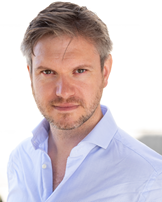 Oliver Birch
Actor, composer, musician, and theatre-maker who has been a workshop director and acting tutor at LAMDA since 2014, teaching across the BA, MFA, Foundation, and MA programmes, and serving as Course Leader for the MA/MFA Classical Acting. As a composer and musical director his work includes productions at the National Theatre, Sheffield Crucible, Soho Place West End, and the Roald Dahl Company. As an actor he has performed on Broadway and in the West End, with credits at the National Theatre and the Almeida, in productions directed by Rupert Goold and Polly Findlay among others. He is the founder and director of En Masse Theatre, an award-winning company whose name speaks directly to his long-standing interest in collective performance.
 George Ryan
Assistant Professor of Voice and Text, Head of Voice, LAMDA; former Head of the Voice Department at Italia Conti on the BA Acting; current faculty member Shakespeare’s Globe; George has taught voice and text internationally and in London at Royal Central School of Speech and Drama, Arts Educational School, Mountview, Royal Academy of Dramatic Arts (RADA), Rose Bruford, and coached on professional productions and actors in private studio. George holds a BFA from Adelphi University, diploma from American Academy of Dramatic Art, and MA in Voice Studies at Royal Central School of Speech and Drama, University of London. George has taught extensively in the States at such professional theatres as: The Paper Mill Playhouse, George Street Playhouse, Pershiable Theatre Company, and Huntington Theatre Company.
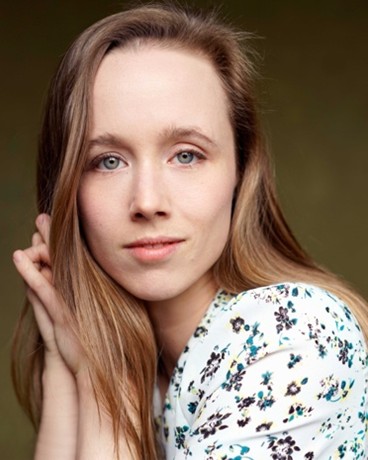 Megan Greenwood
Megan was born and raised in Victoria, British Columbia (B.C.), Canada where she completed her undergraduate degree in Musical Theatre at the Canadian College of Performing Arts. Upon completion of her degree, Megan spent the next six years in Vancouver performing for various theatre companies there and across B.C. A couple of her favourite credits from this time include playing Cinderella in Into the Woods and Regina in Rock of Ages. Around this time, Megan became passionate about helping students to achieve their goals in performance which led her to pursue her MFA in Musical Theatre at LAMDA. Megan is grateful for her time at LAMDA which allowed her to deeply investigate performance practice and pedagogy, and she is excited to continue exploring this craft through teaching.
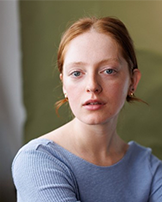 Anna Johnston
Anna Johnston is an MFA student at LAMDA, where she has been studying Classical Theater. Originally from Charleston, South Carolina, where she spent many years in the world of classical music playing the Oboe, she then earned her BFA in Theater Performance at Belmont University in Nashville, Tennessee, graduating in 2024. With extensive training in Stage Combat, Singing, and various movement practices, Anna is always searching for new and fun ways to find the truth in the physical life of her work.
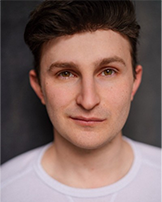 Adam Sanderson
Adam is an Actor, Dancer, Comedian, and Playwright currently based in London. Before he got his Master’s in Classical Acting from LAMDA, he studied at the University of Southern California, receiving a BA in Theater. Although much of his current work is based in adapting Shakespeare and other classical dramatists, he is also heavily influenced by the use of stand-up comedy and partner dance in performance. In Los Angeles, he trained in dance styles such as Ballroom, Greek Folk, Country Western, and Club Latin, as well as performed at iconic comedy clubs such as the Laugh Factory and Westside Theater. In London, he recently wrote and starred in a one-act comedy called “I Eata Da Pasta!” at the Fool’s Fringe Festival and is currently working with other LAMDA graduates to expand it into a full-length production.
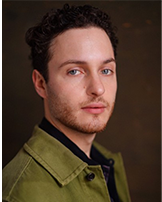 Sol Alberman
Sol Alberman is an actor and writer from London. He received a BA in classics from the University of Cambridge, where he won the Jasper Ridley and Henry Arthur Thomas awards, and later trained for an MFA in acting at LAMDA. As a playwright he was featured as part of the National Theatre GB’s ’New Voices’ anthology series on Audible. He co-directs ‘Thunk’ productions, making theatre and short films in the UK.
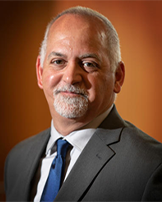 Herman Daniel Farrell III
University Research Professor at the University of Kentucky. Award-winning playwright, screenwriter and noted scholar. President of the International Eugene O’Neill Society.
Publications: The Eugene O’Neill Review, Sorbonne University Press, McFarland & Company, Northwestern University Press (upcoming). Farrell’s “Introduction: O’Neill in World Drama” will be published by Alma Books in a new anthology of O’Neill plays in 2026. “The August Wilson and Lloyd Richards Collaboration” to be published in Centering and Celebrating Wilsonian Warriors, ed. Sandra Shannon (Northwestern University Press) in 2027. He is at work on Way of Life: A Biography of Lloyd Richards (Bloomsbury Publishing, 2027). Productions/Workshops: Lincoln Center Director’s Lab, Manhattan Theater Club, Primary Stages, The Flea, Echo Theater Company, National Playwrights Conference at the O’Neill, and New Dramatists. He was co-writer of the Peabody Award winning HBO Film Boycott. President of the Eugene O’Neill Society (2024-26).
 Frank Behnke
Frank Behnke, born in Hanover in 1962, is a German director, dramaturge, and theater manager. His most important artistic positions include the Nuremberg State Theatre, the Hamburg Schauspielhaus, the Münster Theatre, and currently the Meiningen State Theatre. As a dramaturge, he focuses on contemporary German-language drama, producing numerous world premieres, commissioned works, and theatrical texts that consistently address social relevance and political themes. He is the initiator of the “Young Dircetor’s Week”, a festival which will take place for the first time at the Meiningen State Theatre in March 2026.
Great classics by Shakespeare, Schiller, Brecht, ancient authors, and Chekhov, as well as plays by Tennessee Williams, Rainer Werner Fassbinder and Thomas Bernhard in challenging interpretations, characterize Frank Behnke as a director. His work exhibits great aesthetic diversity, is always visually striking, physical, and highly emotional, while simultaneously being linguistically focused and faithful to the original text. Choral speaking is an important stylistic element for him. Current productions include Friedrich Schiller’s “The Maid of Orleans” (2025) at the Meiningen State Theatre, Aeschylus’ “The Oresteia” (2025) at the Hof Theatre, and the world premiere of “Biermann – Dragon Slayer” at the Meiningen State Theatre. In the upcoming season, he will direct, among other works, Roland Schimmelpfennig’s new version of the Nibelungenlied, “Lake of Ashes,” as well as an adaptation of F. Scott Fitzgerald’s “The Great Gatsby.”
ORESTEIA at the HOF theatre in Germany 2025
At the beginning of Frank Behnke’s production of the Oresteia, which draws on Peter Stein’s translation, stand one hundred chairs bearing photographs of the missing and fallen of the Trojan War, which has been raging for ten years. Here, war doesn’t just take place on the battlefield. What does it do to the part of society that stays at home, the production asks? In Frank Behnke’s ‘Oresteia,’ the bloody tragedy of the House of Atreus is less a curse of the past than the logical continuation of the war’s violence on the battlefields of the family. The provocative center of the first part of the trilogy is Anja Stange as Clytemnestra, who asserts her own role against all patriarchal patterns, ultimately succumbs to the temptation of power herself, and, together with Aegisthus, transforms into a shamelessly brutal tyrant.
The second part is the most concentrated and shortest, focusing on the next generation, with Electra playing a significantly more central role alongside Orestes than in the original text. Agamemnon and Cassandra, as bloody ghosts, are present until Clytemnestra’s death, driving the children to commit matricide.
The most political and, at the same time, most comical element of the production is the Erinyes of Part Three, dressed in purple excrement-smeared tracksuits. The question of how a radicalized and extremely divided society can reunite hangs over this part of the production, culminating in Aeschylus’ hopeful formula, “Peace forever!”
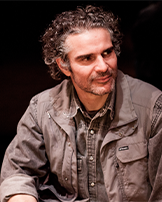 Savvas Stroumpos
Savvas Stroumpos was born in 1979 in Athens. He graduated from the drama school of the National Theatre of Greece (2002). He has an MA with Merit from the department of Theatre Practice, University of Exeter, UK. Since 2003 he collaborates with Attis Theatre and Theodoros Terzopoulos as an actor and director’s assistant. With Zero Point Theatre he has directed: Franz Kafka In the Penal Colony (2009), William Shakespeare As You like It (2010), Albert Camus The Justs (2011), Franz Kafka Metamorphosis (2012), Georg Buchner Woyzeck (2013), Franz Kafka In the Penal Colony (2014 – 2nd version for the Athens Festival), Yevgeny Zamiatin We (2015), Heiner Muller The Mission: A memory of a revolution (2016), Dimitris Dimitriadis Troas (2017), Gyorgy Kurtag Kafka Fragments (2018), Samuel Beckett Waiting for Godot (2018), Sophokles Antigone (2019), Samuel Beckett Happy Days (2020), Franz Kafka Report to an Academy (2021), Aeschylus The Persians (2022). Since 2013 the performances of Zero Point are staged and presented in Attis Theatre – New Space.
For more information, please email [email protected] or call +30 210 600 9800 ext. 1532, 1332.
Classes start: May 4, 2026