
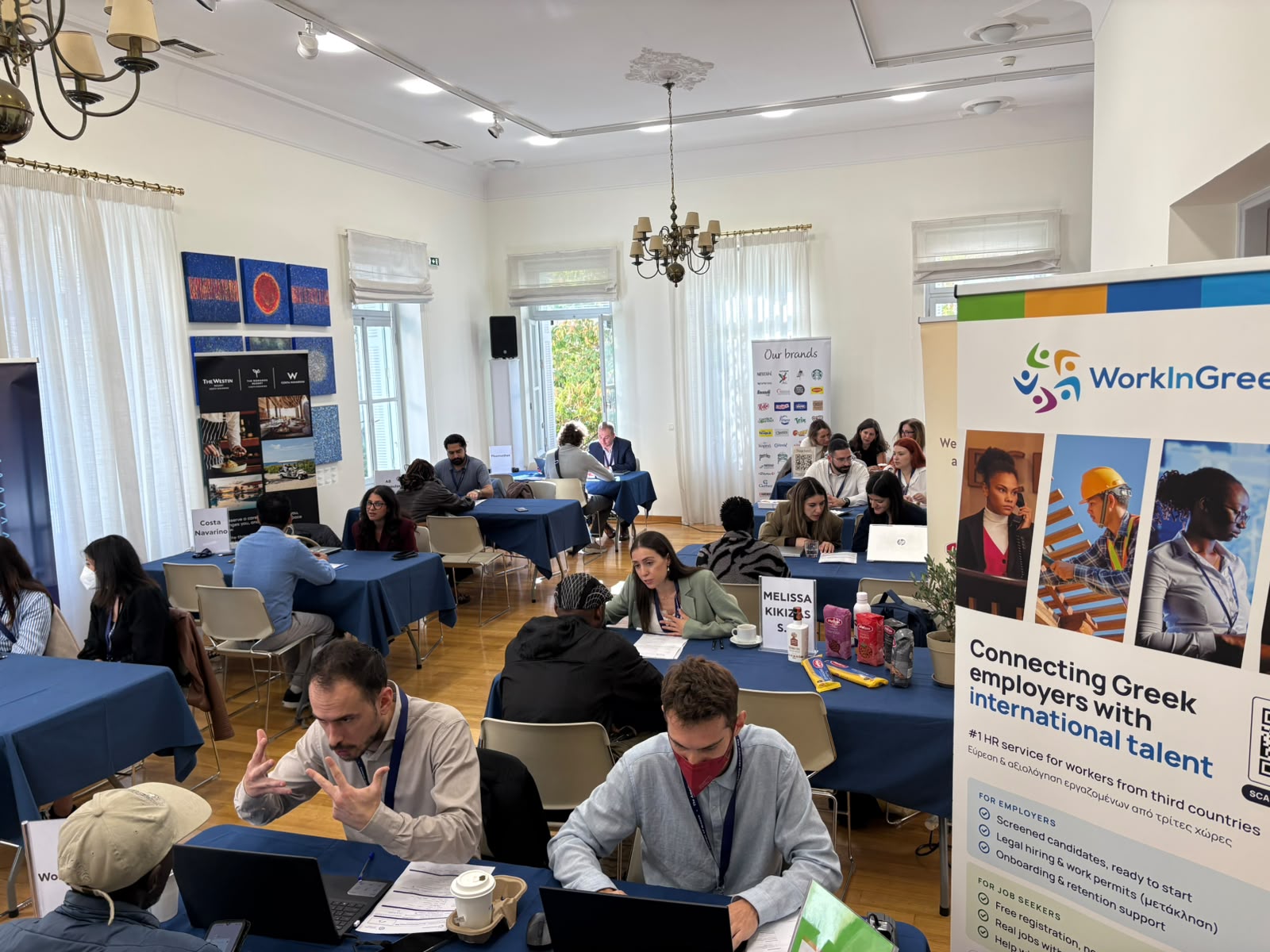
Responding to the urgent need of Greek businesses for specialist and non-specialist labor, which every year deprives Greece’s GDP of billions of euros in growth, the Demos Center at The American College of Greece (ACG), in collaboration with WorkInGreece.io, a rapidly expanding company that connects Greek businesses with international workers to fill gaps that cannot be covered by the Greek workforce, organized on 4–5 November, the 1st Athens International Employment Forum.
The Forum took place at The American College of Greece’s neoclassical building in Plaka, the historic Athenian neighborhood at the foot of the Acropolis.
On the Forum’s first day, over 450 immigrants – all authorized legally to work in Greece – gathered for interviews with 10 top Greek companies from sectors as diverse as construction, pharmaceuticals, food processing, supermarkets, logistics and technology retail.
Participating companies were Nestlé Hellas S.A., Pharmathen, DEMO Pharmaceuticals S.A., the AKTOR Group, Costa Navarino, ΑΒ Vassilopoulos, Plaisio Computers S.A., Korres S.A., Melissa Kikizas S.A. and WorkInGreece.
Ms. Laura Lo Castro, the Representative for Greece of the United Nations High Commissioner for Refugees (UNHCR – the UN Refugee agency), visited the Jobs forum and spoke with representatives of companies and of ACG.
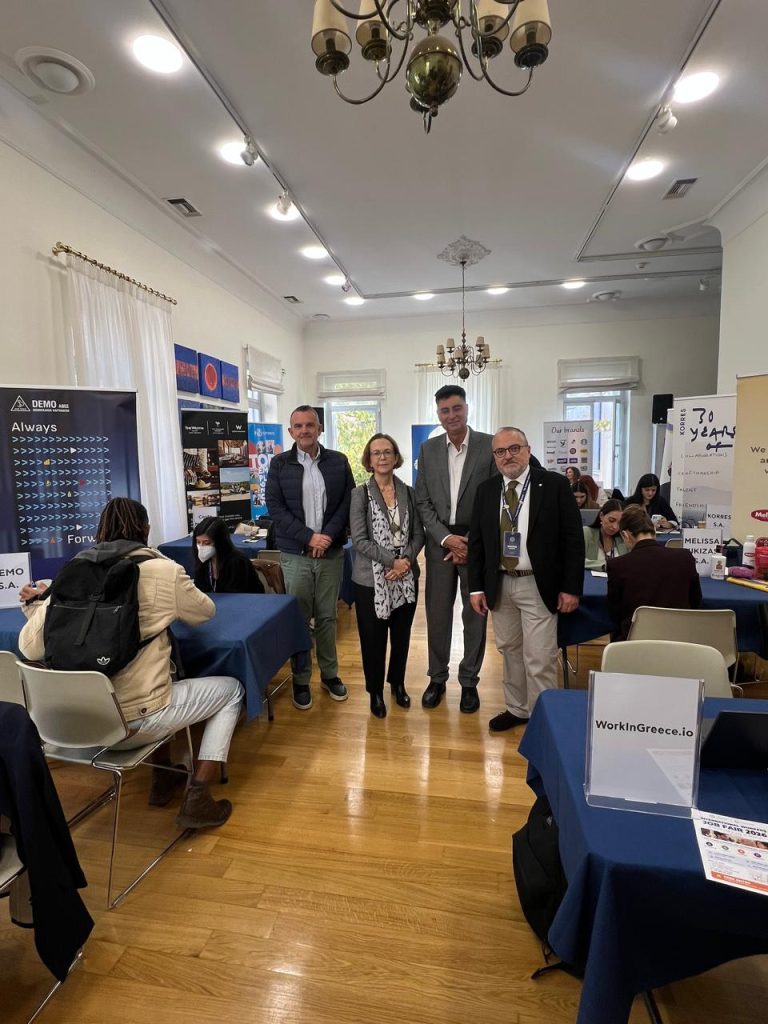
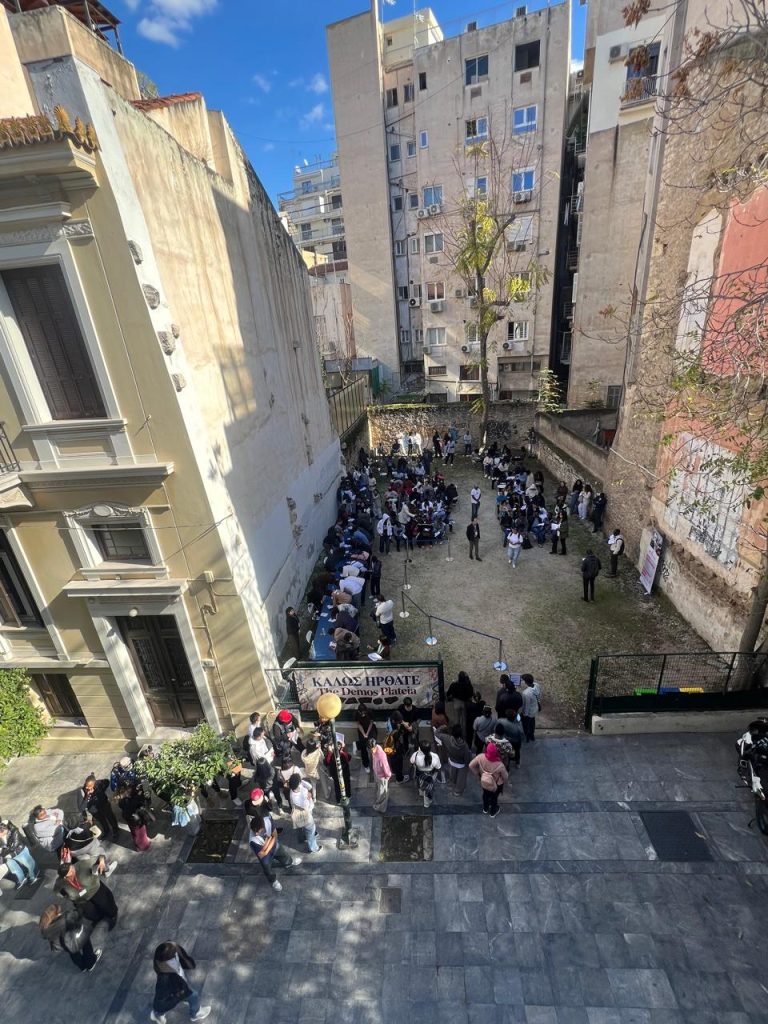
Of the 450 participants – people who often work menial jobs without enjoying workers’ rights or paying taxes and contributing to the social insurance fund — over 200 were either hired or were invited for a second interview by one or more prospective employers.
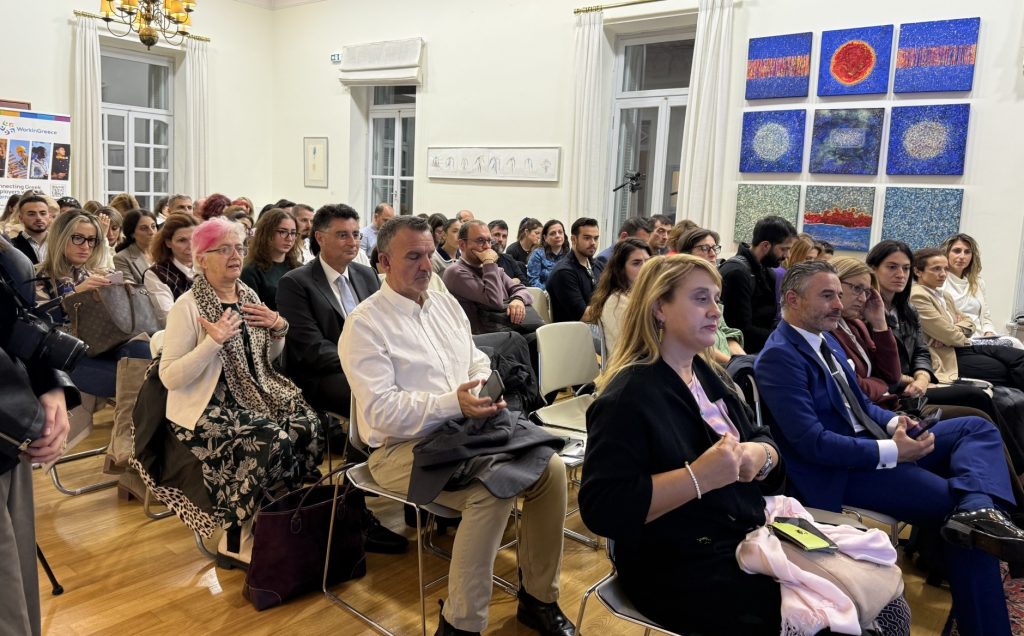
The second day was dedicated to an extensive discussion of the issue of the proper employment of legalized immigrant labor. In front of an audience of over 100 business owners and HR professionals as well as lawyers and academics, experts from the government, the United Nations refugee agency, academia, law, the human resources profession and business discussed the opportunities presented by the thousands of immigrants who entered Greece in the past decade and have remained here legally. They also discussed the problems with bureaucracy that persist despite significant improvements in recent years, as well as the cultural aspects of employing workers from other cultures.
It was noted that Greece’s GDP loses upward of 5,5 billion euros per year because companies cannot expand due to labor shortages – and the problem is becoming worse every year.
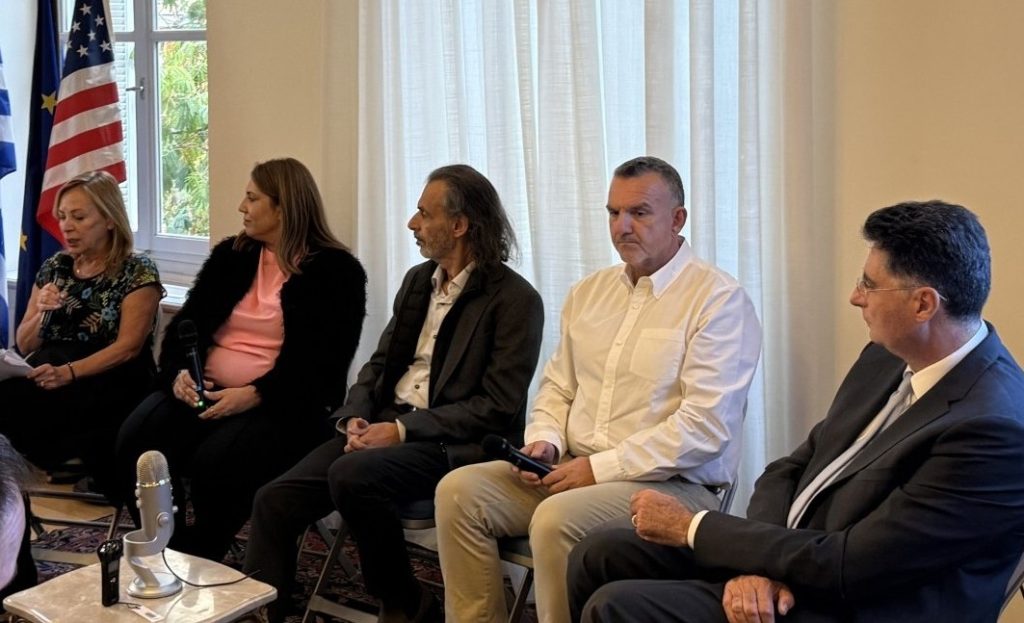
Panelists were Kostas Agrapidas, General Director of Labour Relations, Health, Safety and Employment Integration at the Ministry of Labour and Social Affairs; Petros Mastakas of the UNHCR; Vangelis Kanellopoulos, Managing Director, WorkInGreece.io; Violeta Ioannidou, CEO of Elastotet; Dr. Vasilis Pavlopoulos, Professor of Intercultural Social Psychology at the University of Athens; Athanasios Vitsentzatos, General Director of Migration Policy, Ministry of Migration and Asylum; Maria Rigaki, lawyer and partner at the international consulting firm EY; Panagiotis Petrakis of WorkInGreece.io; and Konstantinos Hatzykalymnios, Head of the People Certification Department at TÜV Hellas (TÜV Nord).
Both panels were coordinated by journalist Mary Lampaditi, who writes about labor issues for the newspaper Proto Thema.