
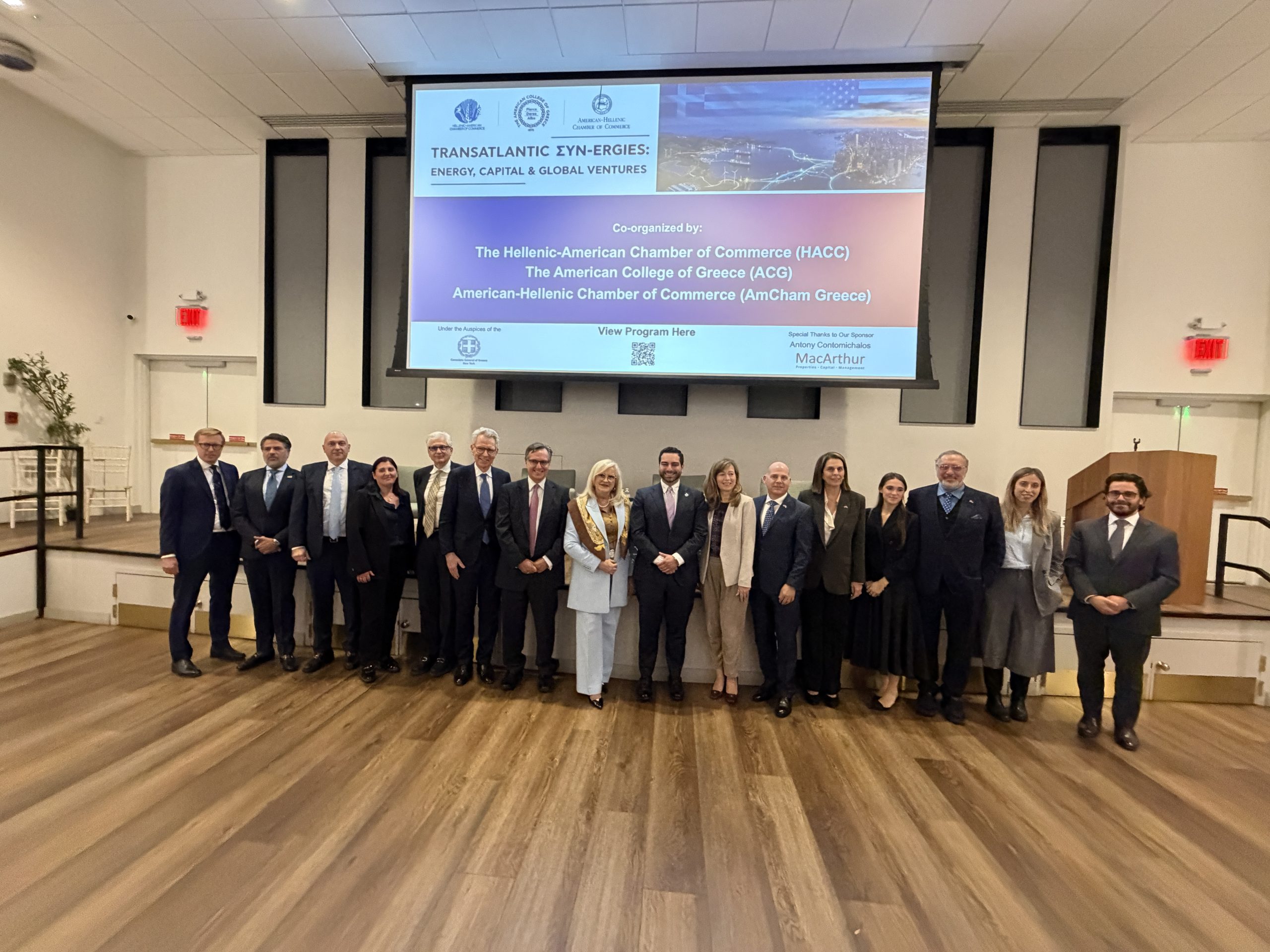
The American College of Greece joined distinguished government, business, and academic leaders in New York to advance dialogue on energy security, investment, innovation, and the future of transatlantic cooperation.
The evolving strategic partnership between Greece and the United States, and the growing opportunities it presents for energy security, investment, and innovation, took center stage at “Transatlantic ΣΥΝ-ERGIES: Energy, Capital & Global Ventures,” held on November 4, 2026, at Chiotes Hall in New York City. Organized by the Hellenic-American Chamber of Commerce (HACC), in collaboration with The American College of Greece (ACG) and the American-Hellenic Chamber of Commerce (AmCham Greece), under the auspices of the Consulate General of Greece in New York, the event brought together prominent representatives from government, business, academia, finance, and the maritime industry to examine the priorities shaping transatlantic cooperation.
Against a backdrop of geopolitical change, shifting energy markets, and rapid technological advancement, discussions highlighted Greece’s increasingly important position as an energy and infrastructure hub connecting the United States, Europe, and the Eastern Mediterranean. From the strategic significance of American liquefied natural gas (LNG) and the Vertical Gas Corridor to infrastructure financing, emerging technologies, and maritime connectivity, the gathering underscored the importance of translating shared strategic interests into meaningful partnerships.
Education at the Heart of Transatlantic Cooperation
A key dimension of the event was the contribution of higher education to strengthening ties between Greece and the United States, reflecting ACG’s longstanding commitment to connecting academic excellence with international engagement. In a fireside conversation titled “From Knowledge to Impact: Building Transatlantic Bridges Through Education,” Edward C. Wingenbach, PhD, President of The American College of Greece, joined Eraklis A. Diamataris of The National Herald to discuss the role of educational institutions in cultivating future leaders, fostering entrepreneurship, and connecting knowledge with economic and societal progress.
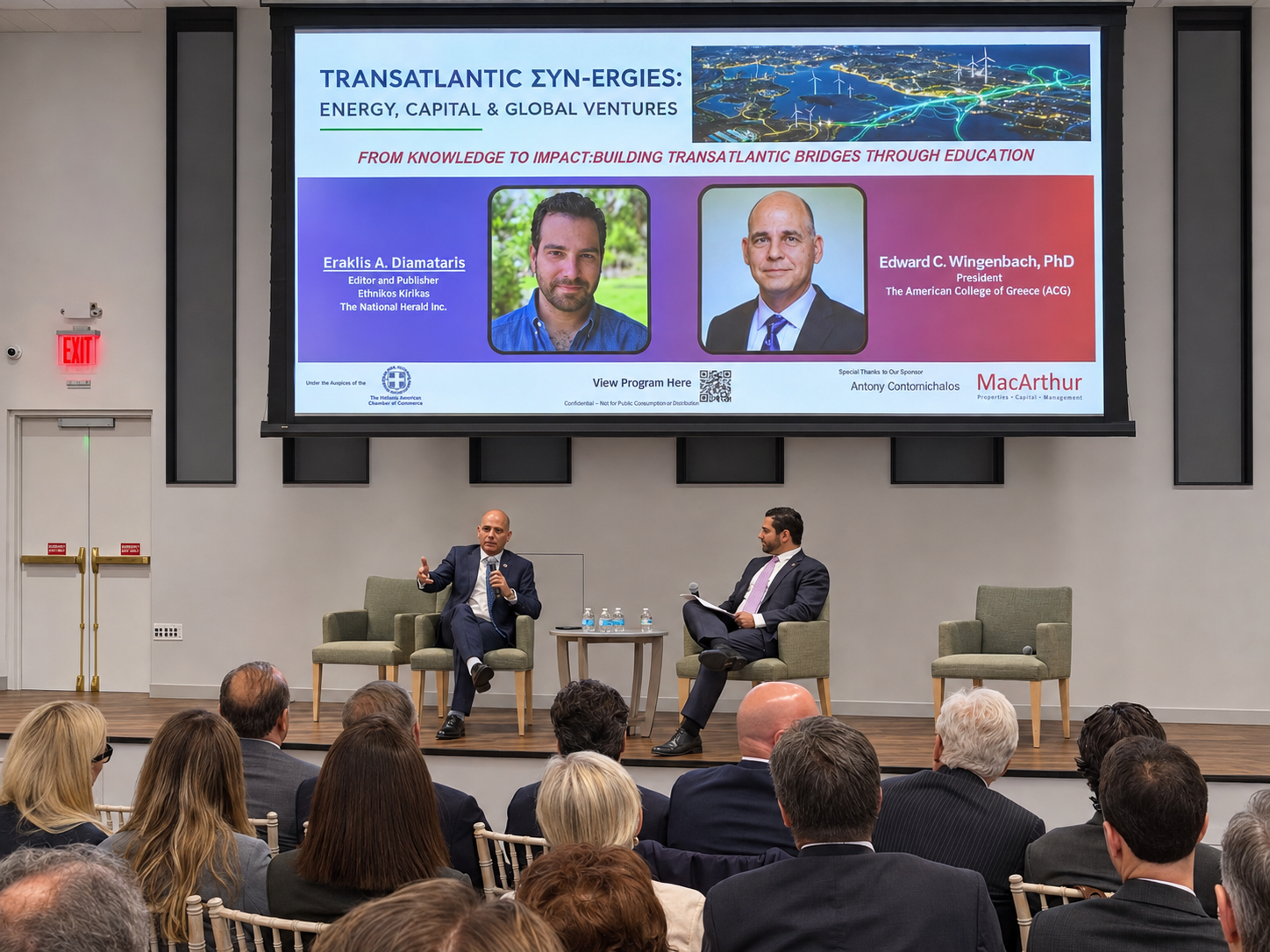
The conversation also explored the importance of engaging younger generations of the Greek diaspora, creating opportunities for meaningful connections with Greece through education, innovation, and shared cultural heritage. President Wingenbach highlighted ACG’s international academic community, expanding educational programs, and role in bringing together academic knowledge, entrepreneurial thinking, and opportunities for collaboration with industry and investment partners. His participation brought an essential perspective to the broader dialogue: the strength of international partnerships depends not only on infrastructure and capital, but also on the people, knowledge, and institutions that sustain them.
Advancing a Shared Vision for Energy Security and Economic Growth
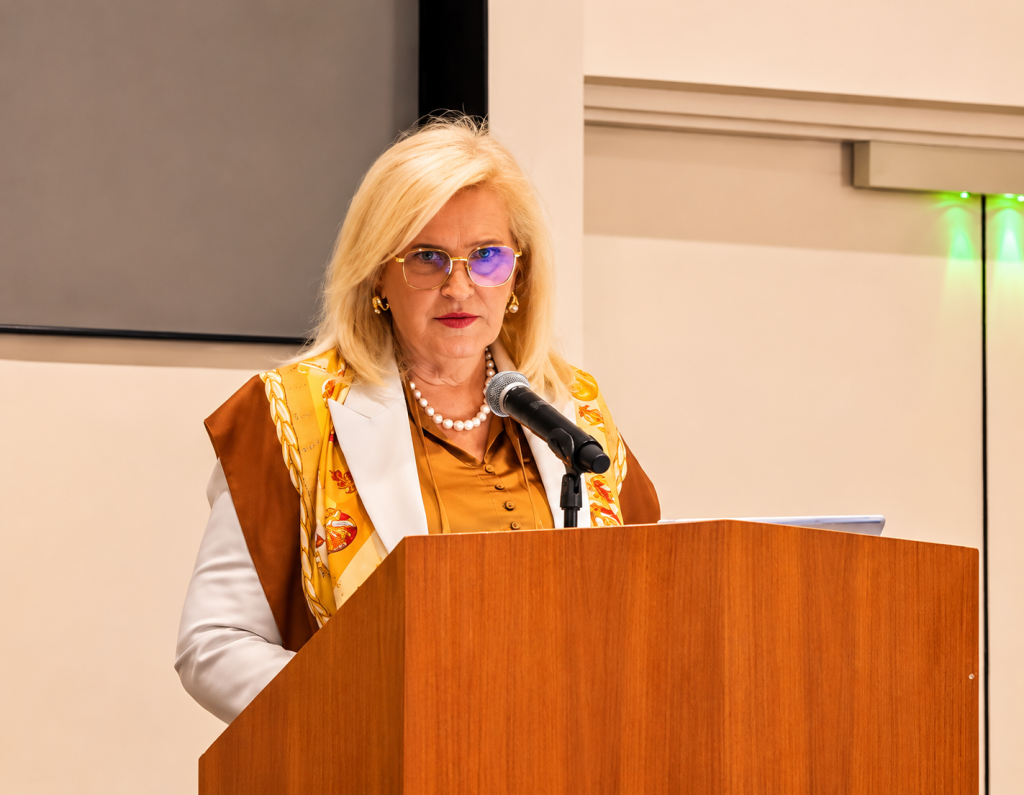
The strategic importance of U.S.–Greece cooperation was reinforced throughout the evening by senior government representatives and prominent figures from the international business community. Opening the gathering, Eftihia Pylarinou-Piper, President of HACC, emphasized the growing need for energy diversification, connectivity, technological innovation, and investment, particularly as artificial intelligence, data centers, and the electrification of economies create unprecedented demands on energy infrastructure.
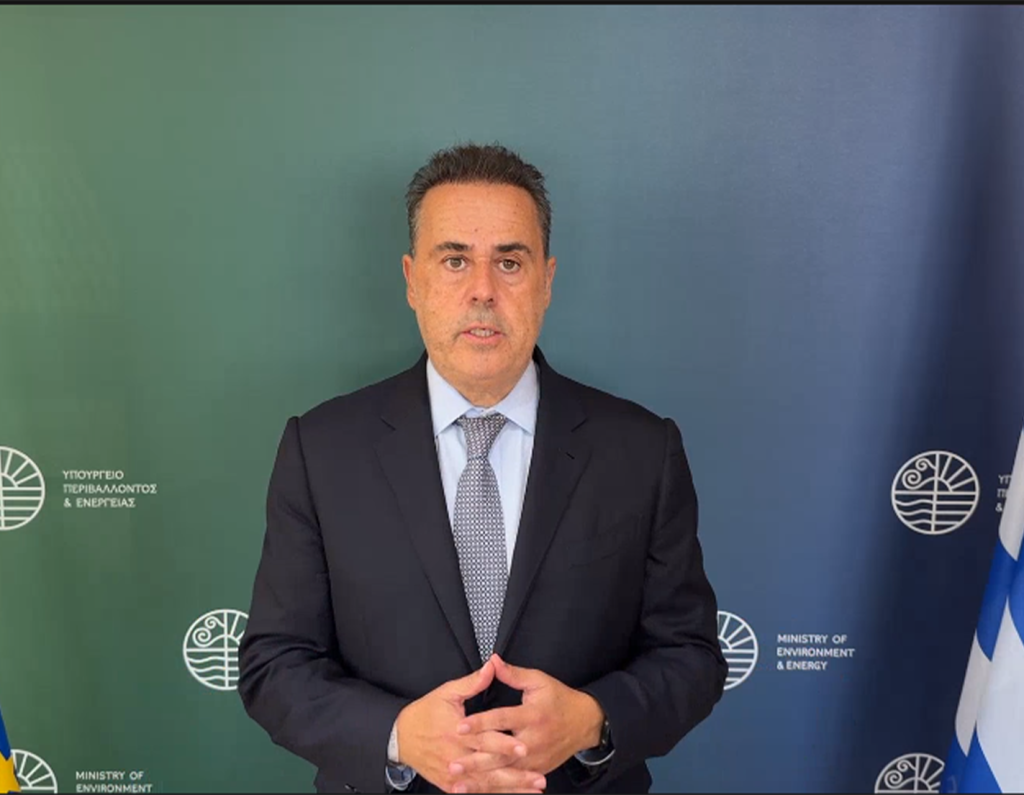
In a prerecorded address, H.E. Stavros Papastavrou, Greece’s Minister of Environment and Energy, highlighted the significance of American LNG and the development of the Vertical Gas Corridor, a major initiative supporting the movement of natural gas through Greece to European markets. He also addressed opportunities in renewable energy, electricity interconnections, storage technologies, and infrastructure investment. The importance of institutional cooperation was further emphasized through greetings conveyed by Petros Dorizas on behalf of Ifigenia Kanara, Consul General of Greece in New York, and a prerecorded message from John D. Saracakis, President of AmCham Greece, who stressed the value of a long-term vision capable of generating tangible economic opportunities.
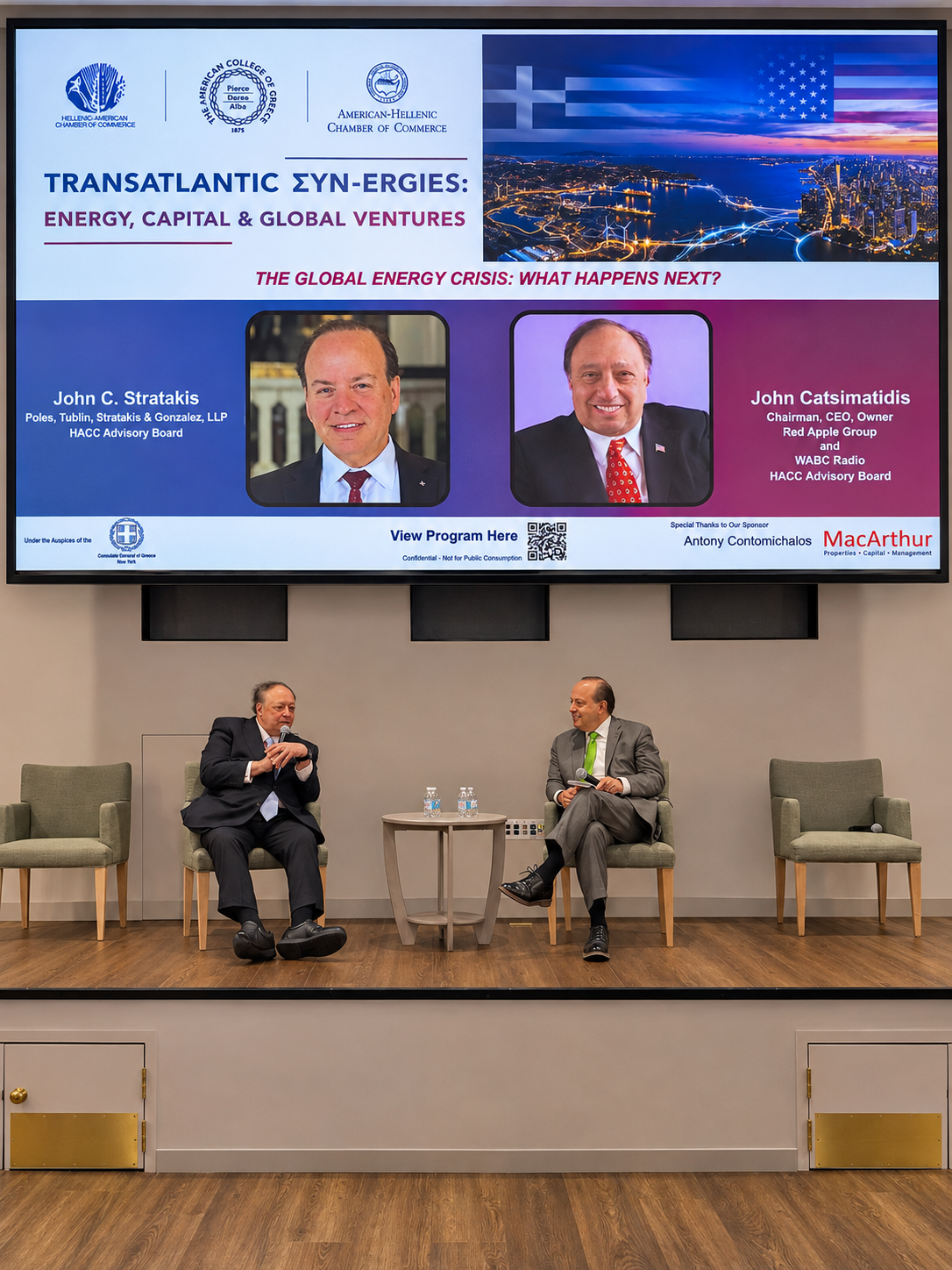
The global energy landscape and its implications for businesses and consumers were also explored in a fireside conversation between John Catsimatidis, Chairman and CEO of Red Apple Group, and John C. Stratakis, Esq. Their discussion addressed energy market disruptions, economic stability, entrepreneurship, and the potential for increased American investment in Greece.
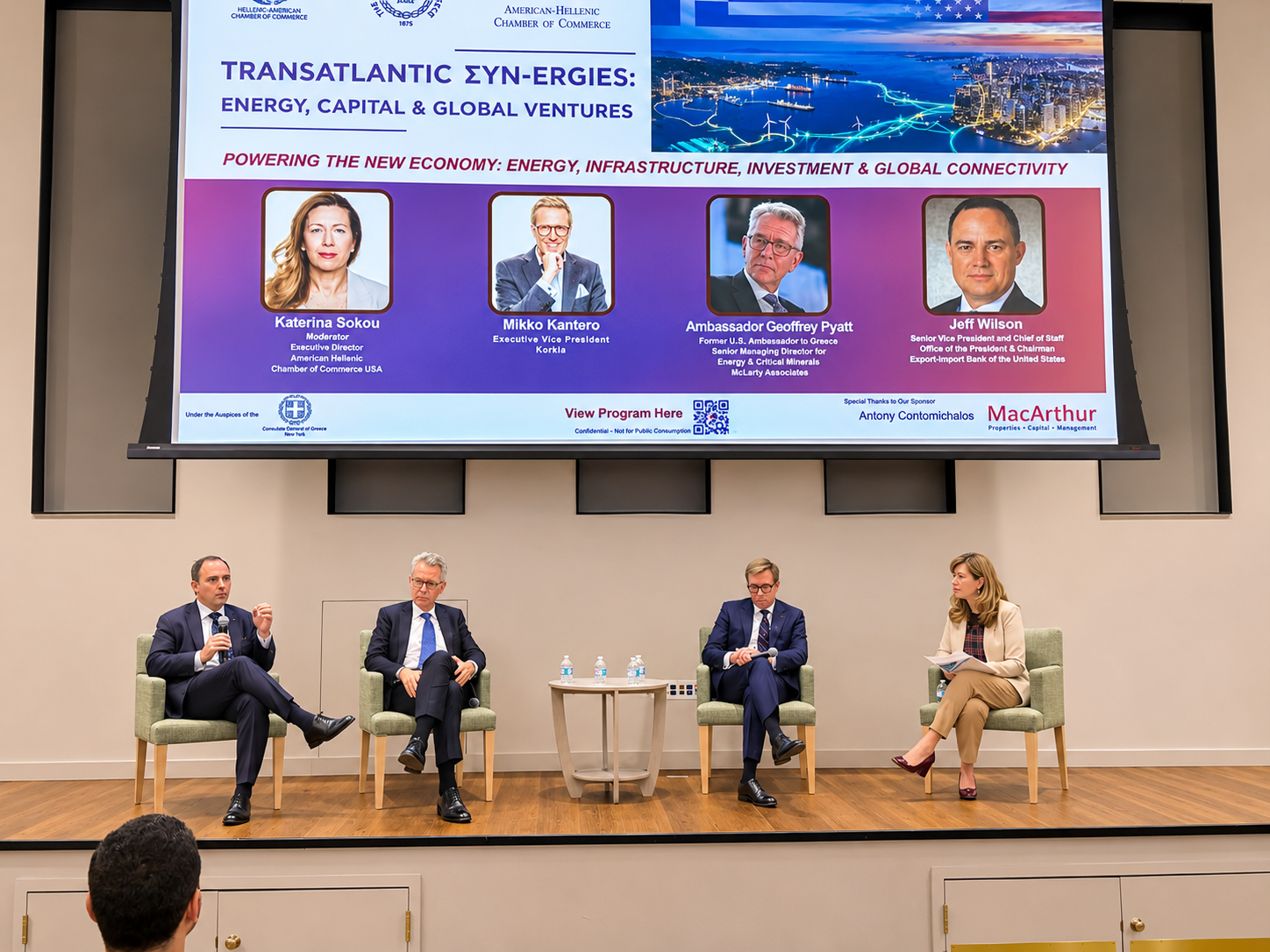
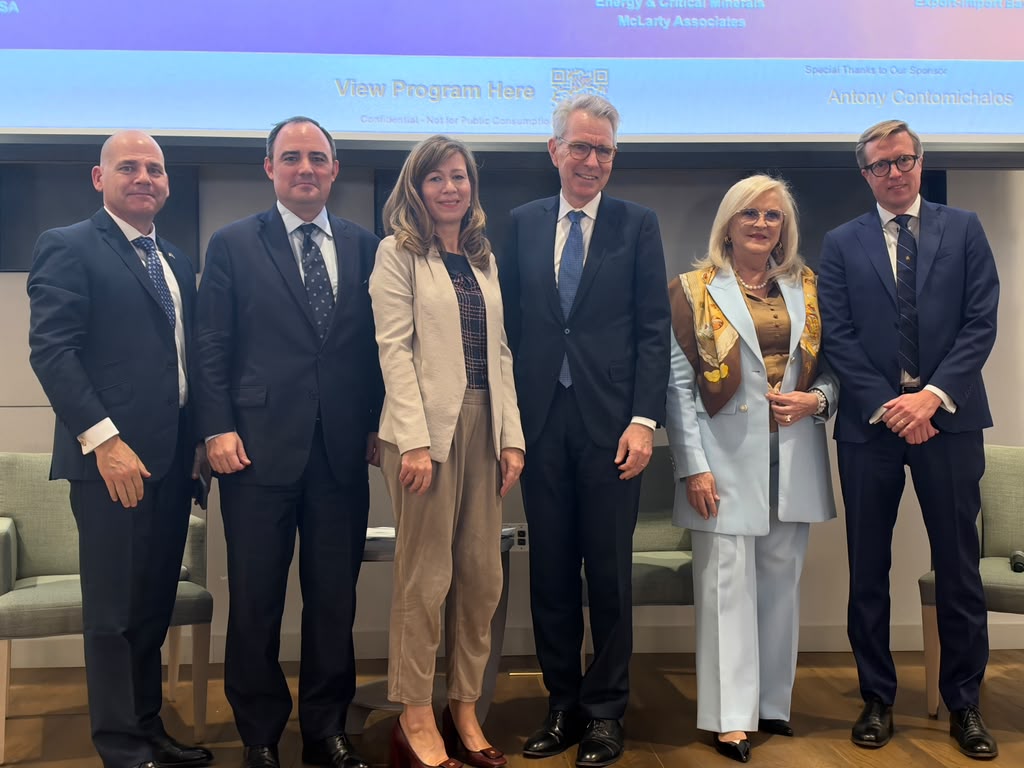
Building on these perspectives, the panel “Powering the New Economy: Energy, Infrastructure, Investment & Global Connectivity,” moderated by Katerina Sokou, Head of the U.S. Office of AmCham Greece, brought together Ambassador Geoffrey Pyatt, former U.S. Ambassador to Greece and former U.S. Assistant Secretary of State for Energy Resources; Jeff Wilson, senior executive at the Export-Import Bank of the United States (EXIM); and Mikko Kantero, Executive Vice President at Korkia. The discussion examined the intersection of energy security, financing, and technological development, with particular emphasis on grid modernization, renewable energy integration, and the investment mechanisms required to advance large-scale infrastructure projects. The Vertical Gas Corridor and the role of American LNG in strengthening Europe’s energy diversification were central themes, alongside the importance of overcoming regulatory and commercial barriers to cross-border cooperation.
Connecting Academic Expertise with Global Industry
The contribution of academic research and expertise to these strategic priorities was further reflected in the participation of Alba Graduate Business School, The American College of Greece. Prof. Dr. Kostas Andriosopoulos, Director of the HELLENiQ ENERGY Center for Sustainability and Energy at Alba, moderated the panel “U.S.–Greece Strategic Energy Partnership: From Energy Security to the Digital Economy,” bringing together leading voices from the energy, maritime, and academic sectors.
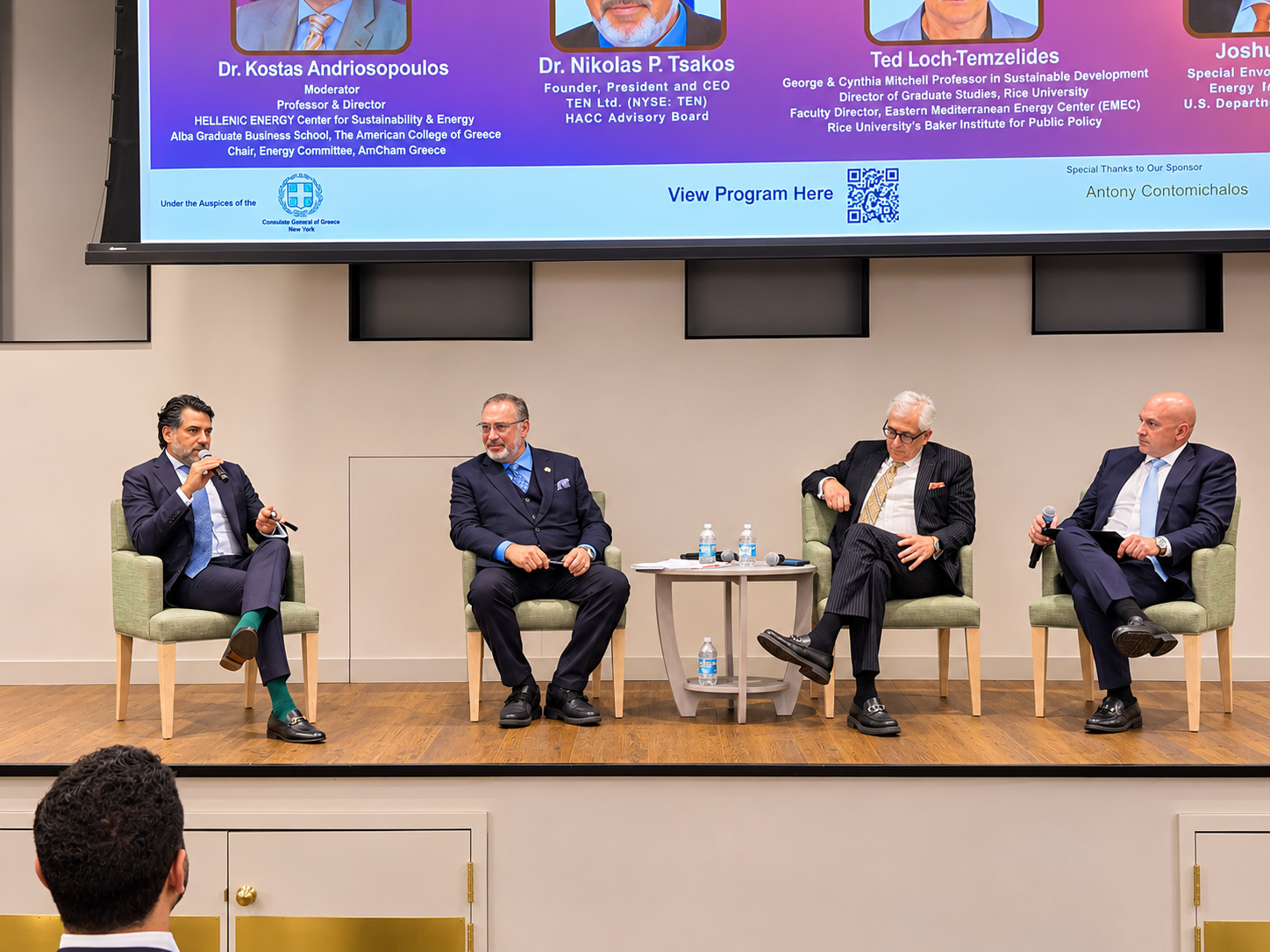
The panel featured Dr. Nikolas P. Tsakos, Founder, President and CEO of TEN Ltd.; Ted Loch-Temzelides, Professor at Rice University; and Joshua Volz, Special Envoy for Global Energy Integration at the U.S. Department of Energy. Their discussion explored the interdependence of energy security, maritime transportation, technological transformation, and economic development, emphasizing the vital role of Greek shipping in global energy markets and the opportunities for stronger cooperation between American energy producers and the Greek maritime industry.
Renewable energy integration, electricity storage, cross-border infrastructure, and coordinated regional policies were among the priorities addressed, alongside the need to ensure the reliability and resilience of international energy networks. The discussion also extended to maritime education and workforce development, with Dr. Tsakos highlighting the Merchant Marine Academy established by the Tsakos family on the island of Chios and its contribution to preparing future maritime professionals, including opportunities for international practical training. Through its involvement, Alba contributed an academic perspective to discussions connecting energy policy, business strategy, and the long-term demands of a rapidly evolving global economy.
Building on Strong Transatlantic Foundations
Beyond the individual discussions, Transatlantic ΣΥΝ-ERGIES demonstrated the value of sustained collaboration among institutions that share a commitment to strengthening ties between Greece and the United States. The event reflected the collective efforts of HACC, ACG, and AmCham Greece, with special appreciation extended to Antony Contomichalos, HACC Board member and ACG Trustee, whose generous sponsorship made the gathering possible. The contributions of HACC Advisory Board members John Catsimatidis, John C. Stratakis, and Dr. Nikolas P. Tsakos, as well as the organizing teams, were also acknowledged.
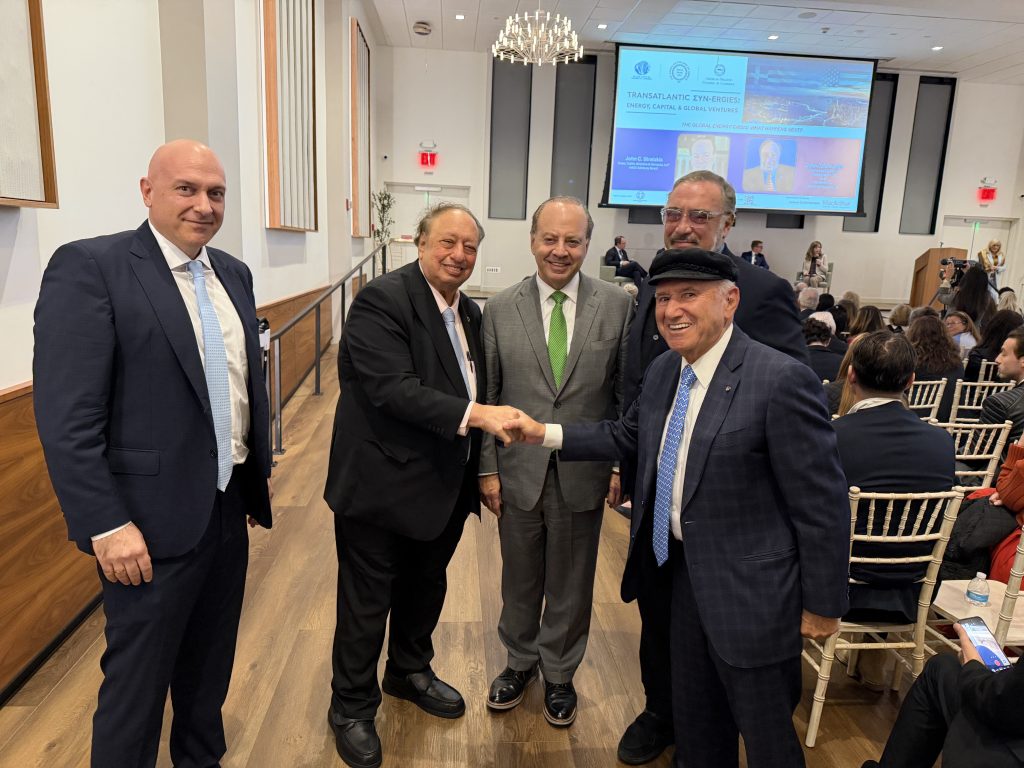
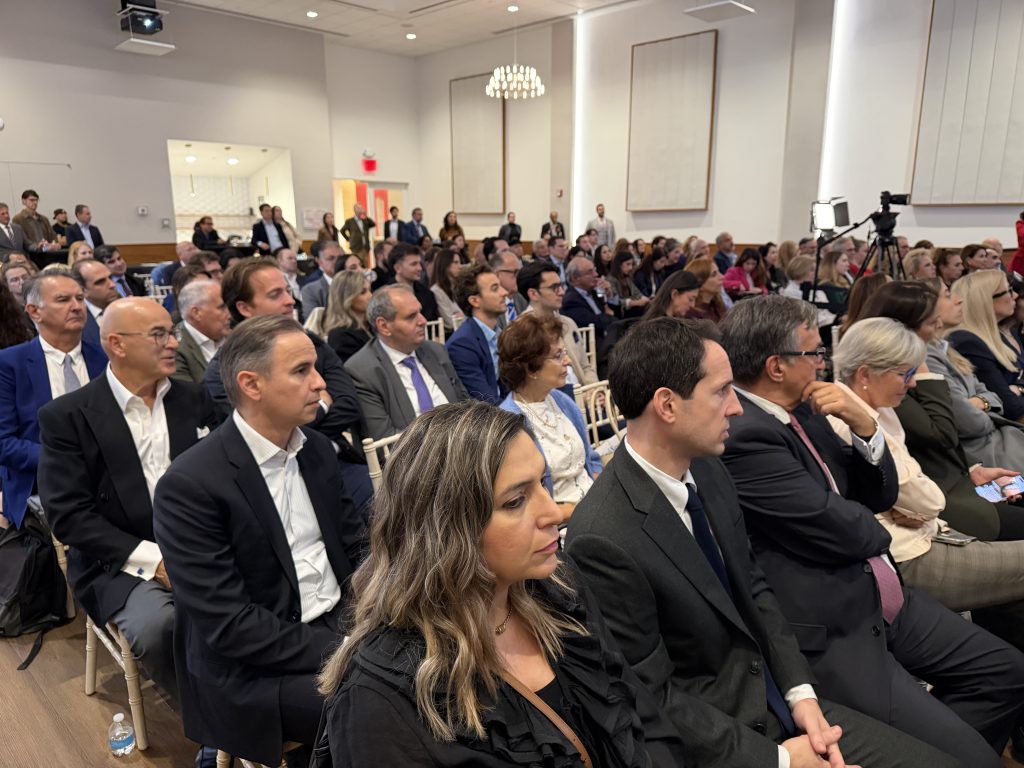
For The American College of Greece, the gathering was a meaningful expression of its longstanding transatlantic identity and its commitment to fostering dialogue that connects education, research, business, and international cooperation. As the relationship between Greece and the United States continues to evolve, Transatlantic ΣΥΝ-ERGIES highlighted the importance of bringing together diverse perspectives, institutional expertise, and shared ambitions to advance partnerships with lasting economic and societal value.
If you would like to watch the event, please click below: