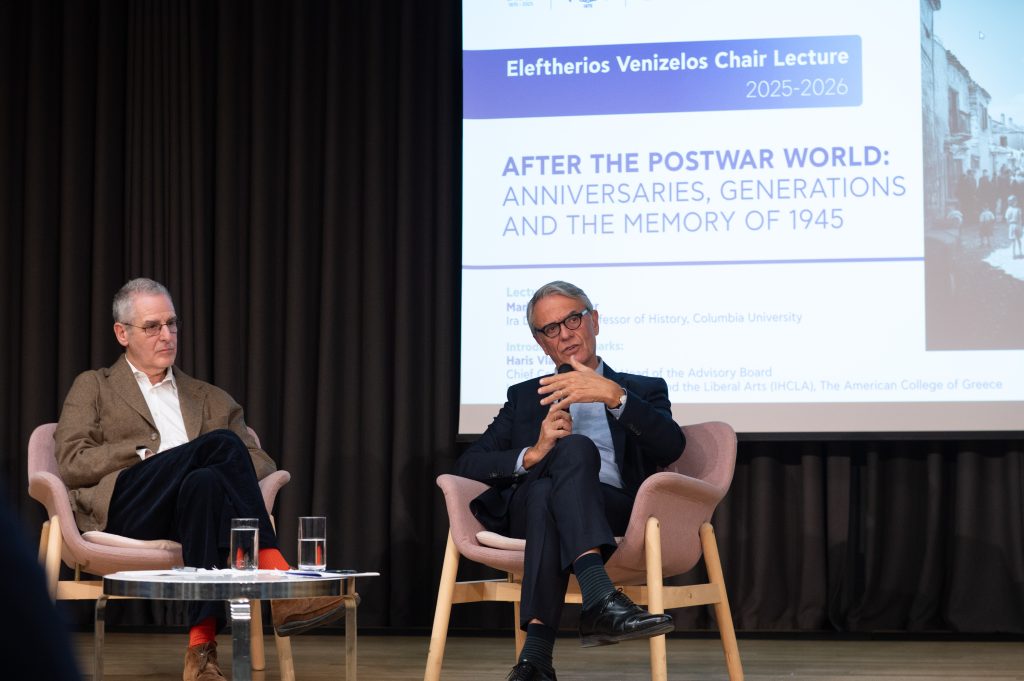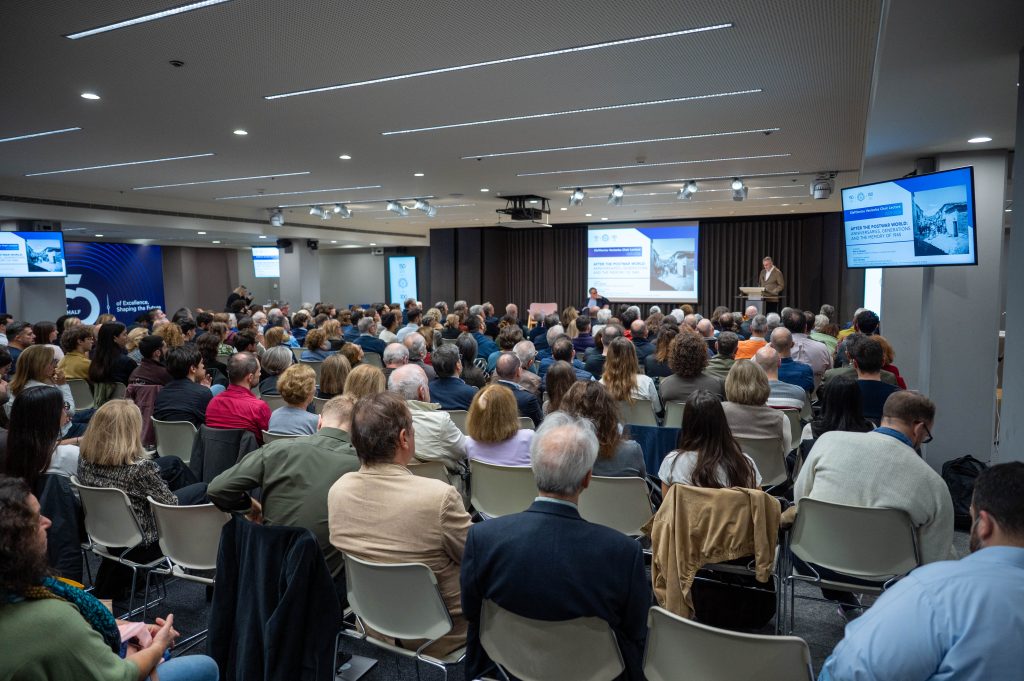
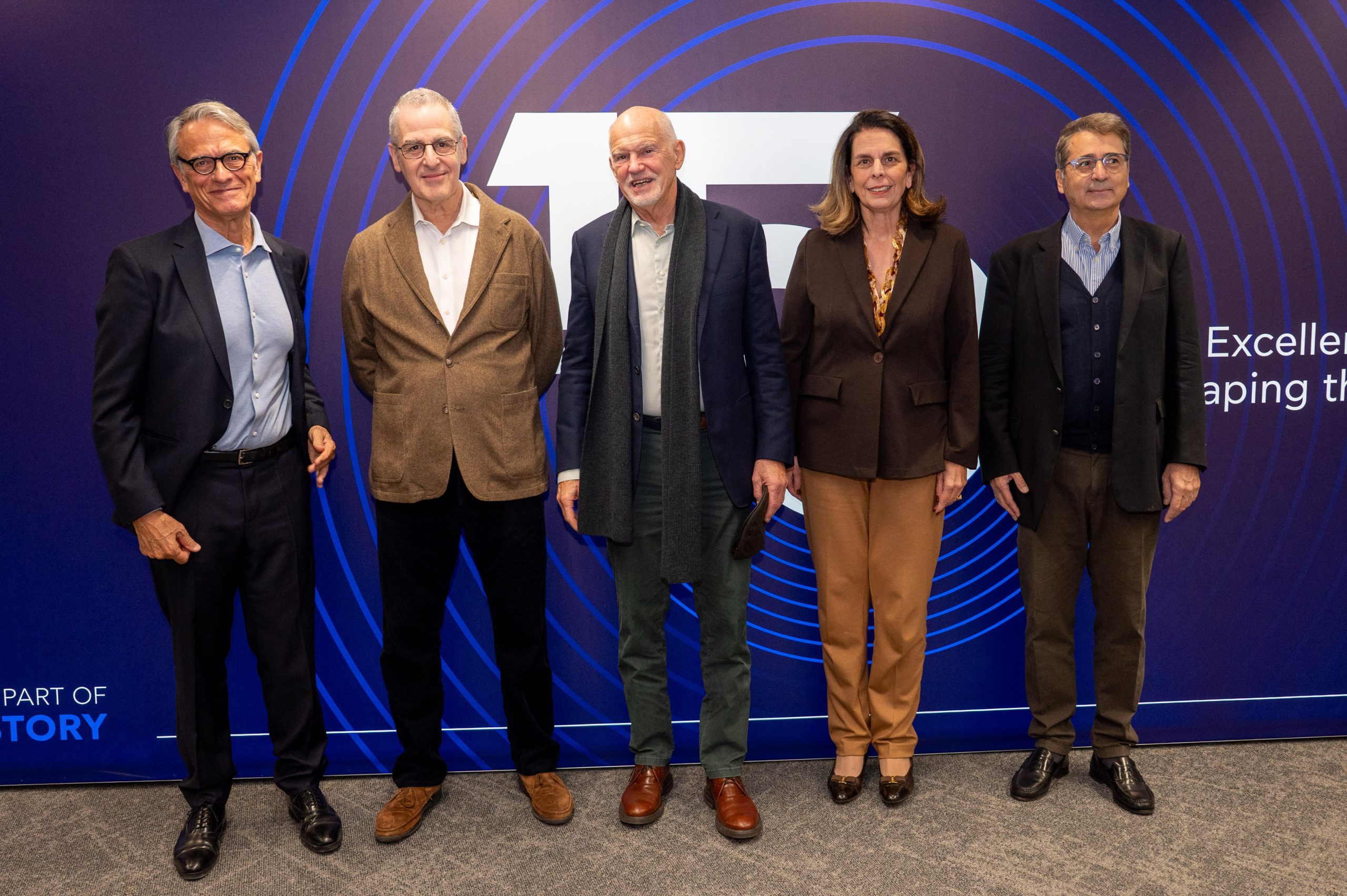
On Thursday, November 13, 2025, The American College of Greece welcomed distinguished historian Mark A. Mazower, Ira D. Wallach Professor of History at Columbia University, as the keynote speaker for the latest installment of the Eleftherios Venizelos Chair Lecturer Series. His lecture titled “After the Postwar World: Anniversaries, Generations and the Memory of 1945,” took place at the ACG Events Hall and was organized by the Institute for Hellenic Culture and the Liberal Arts (IHCLA).
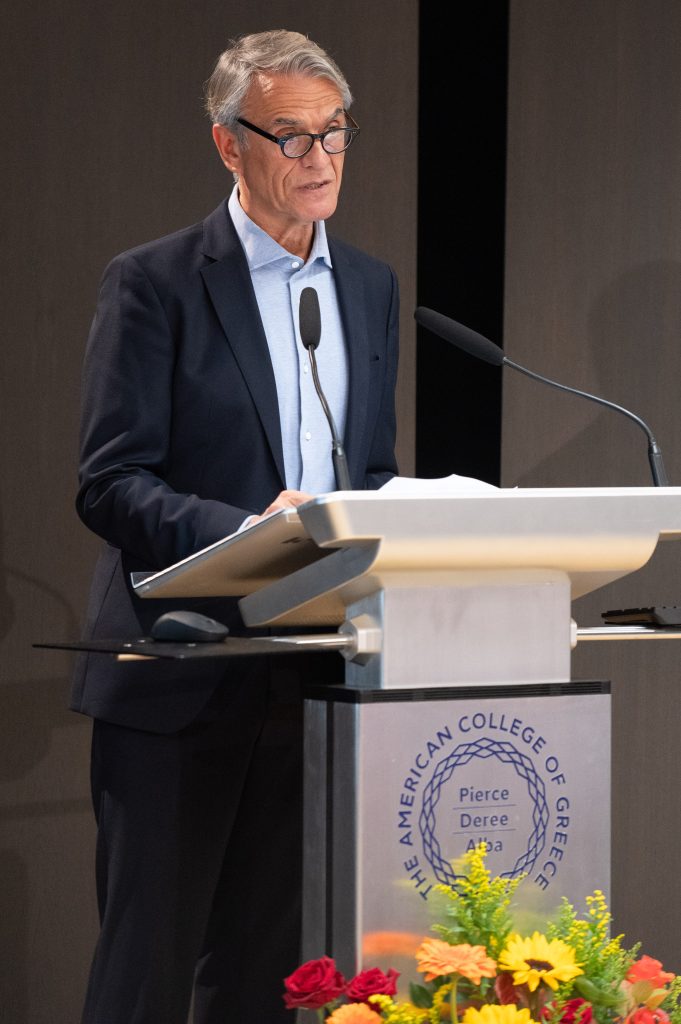
Haris Vlavianos, Chief Consultant and Head of the IHCLA Advisory Board, delivered the opening remarks and introduced Mazower, emphasizing the depth and breadth of his historical work. He noted that Mazower’s books are known for revealing how large political, social, and cultural forces intersect with personal experience — an approach that framed the evening’s discussion of memory, conflict, and historical change.
In his lecture, Mazower explored what remains of the idea that we live in a “postwar world,” eighty years after the end of World War II. He traced how “postwar” once evoked hopes of reconstruction, stability, and democracy, and later came to describe Europe’s rebuilding and decolonization—developments experienced very differently across regions, from Western Europe’s recovery to Greece’s civil war. He argued that the meaning of “postwar” has always depended on one’s perspective in history and geography.
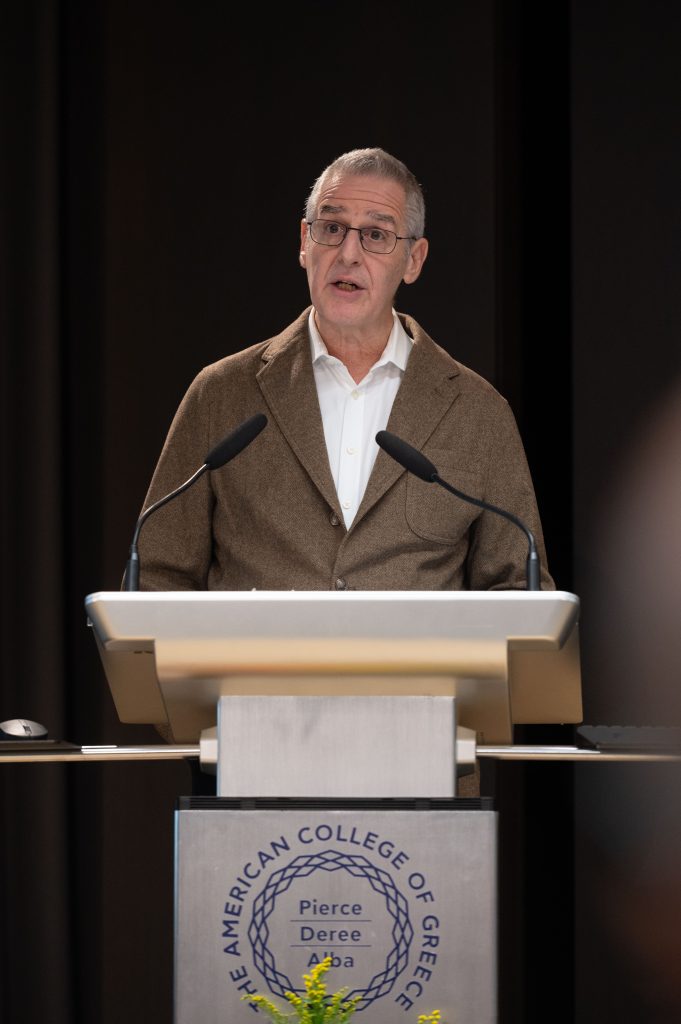
Mazower went on to show how, after the Cold War, the concept of a postwar world gained new significance, as a newly unified Europe seemed to embody a stable and confident order. The term gained momentum in the 1990s and early 2000s, reflecting optimism about integration and a shared political future. Today, however, the return of war to Europe, alongside rising nationalism and pessimism, has weakened the sense of a coherent “postwar age” that once shaped political life.
Another key theme of the lecture was the role of anniversaries in shaping public memory. Major commemorations such as the 80th anniversary of 1945 prompt societies to revisit the past, bringing individual and generational memories into public debate. As these memories enter the public sphere, Mazower noted, they can unite, divide, or be instrumentalized, making the contemporary “duty to remember” both powerful and contested.
During the Q&A session, Mazower addressed questions on national responsibility and changing approaches to military commemoration, illustrating how societies continually renegotiate the meaning of conflict and loss. A reception followed the lecture, providing attendees with the opportunity to continue the conversation informally.