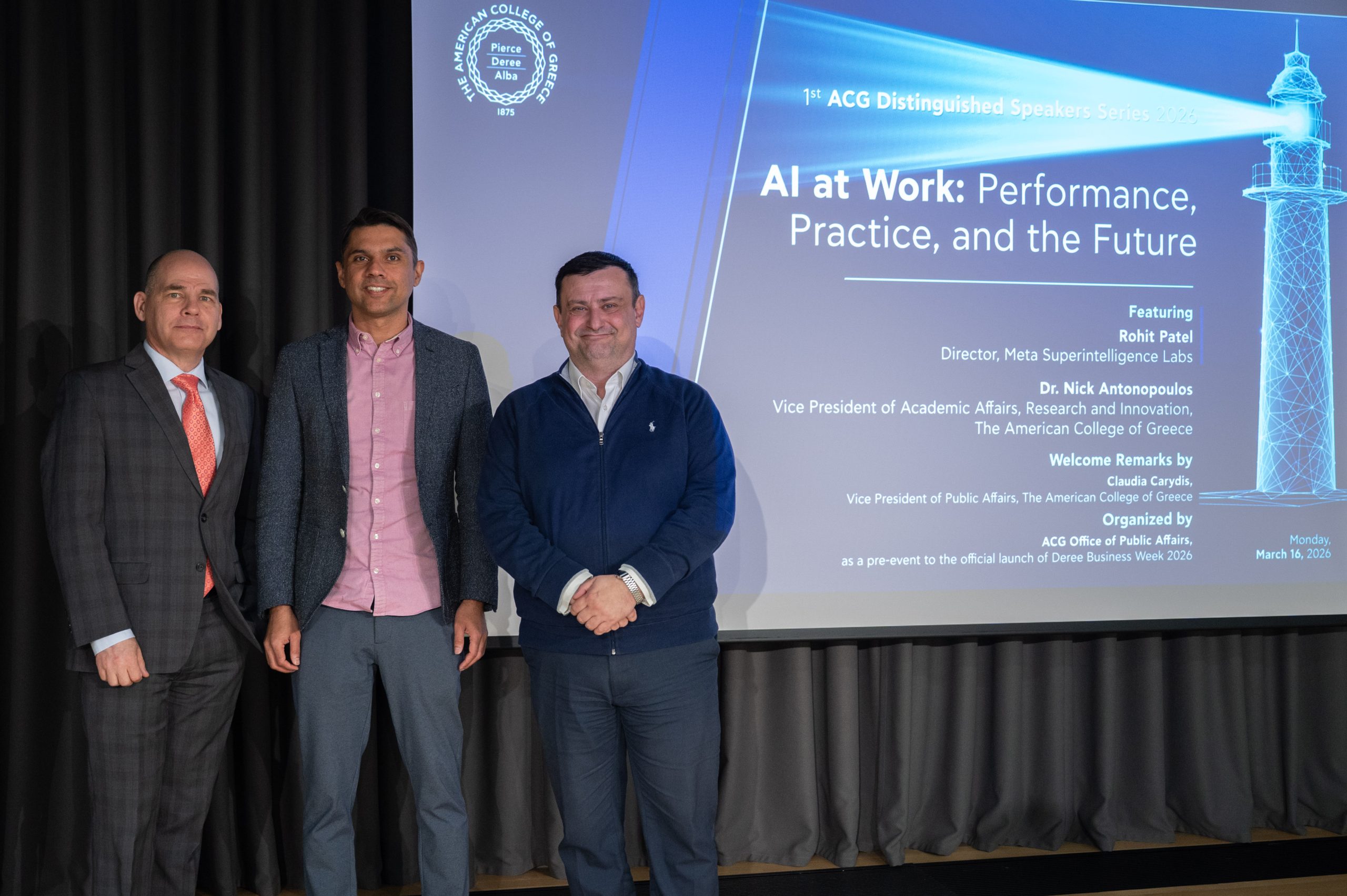
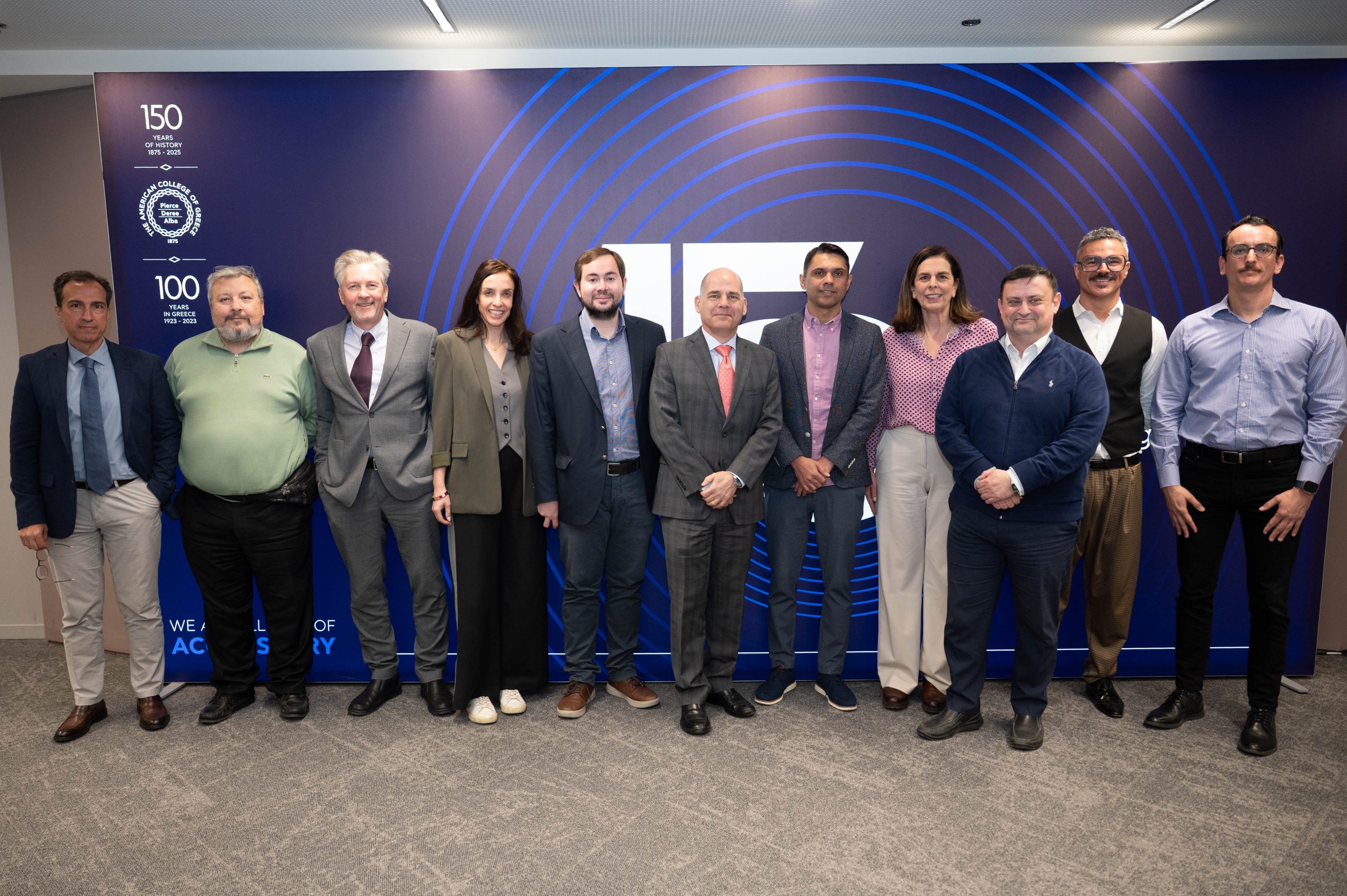
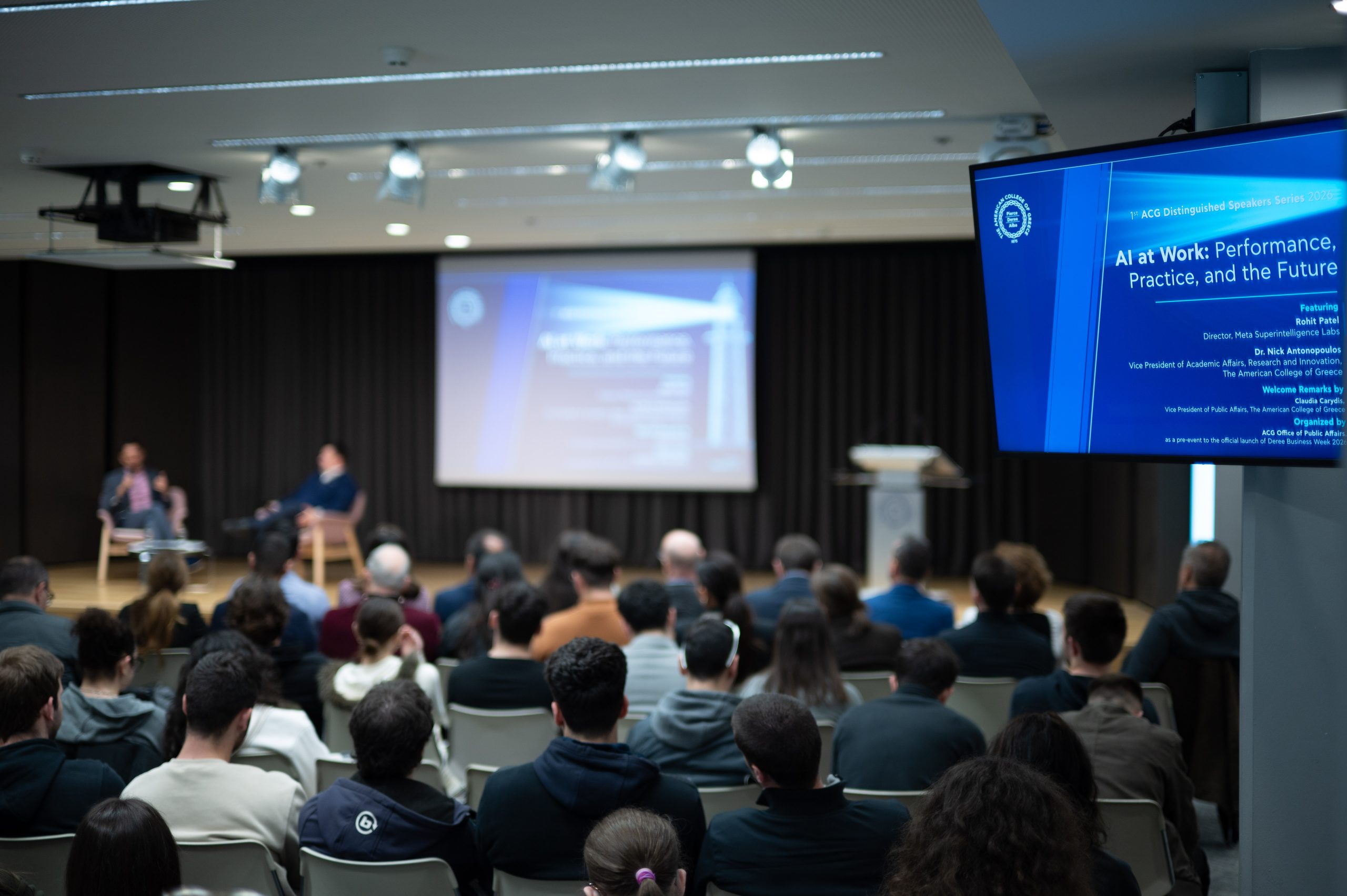
The American College of Greece (ACG) launched the 2026 cycle of its Distinguished Speakers Series (DSS) with a timely and forward-looking event titled “AI at Work: Performance, Practice, and the Future.” Held on Monday, March 16, at the ACG Events Hall, the session brought together students, faculty, and guests for a substantive discussion on how artificial intelligence is reshaping work, skills, and organizations. The event was organized by the ACG Office of Public Affairs, in collaboration with Kathimerini and with the support of the Public Affairs Student Task Force, as a pre-event to the official opening of Deree Business Week 2026.
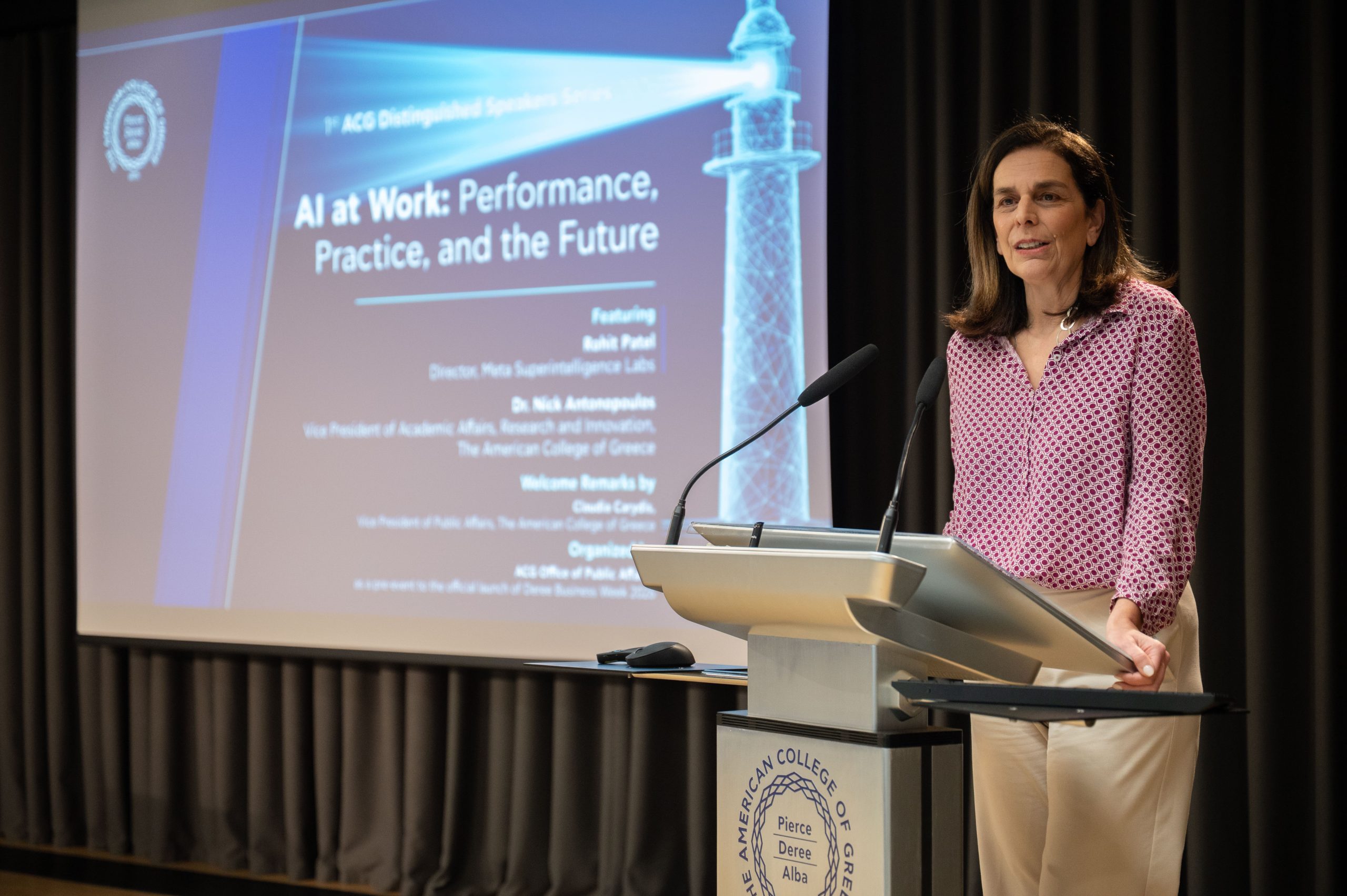
Opening the event, Claudia Carydis, Vice President of Public Affairs at ACG, set the tone by highlighting the purpose and trajectory of the Distinguished Speakers Series. Since its launch in 2024, the initiative has brought leading executives, academics, policymakers, and thought leaders to campus, strengthening the out-of-classroom experience and exposing students to pressing global issues. She emphasized the importance of conversations like this one—at the intersection of technology, work, and society.
The discussion featured Rohit Patel, Director at Meta Superintelligence Labs, in conversation with Dr. Nick Antonopoulos, Vice President of Academic Affairs, Research and Innovation at ACG. Patel, whose work focuses on reinforcement learning and the evaluation of AI systems, offered a rare inside perspective on how today’s most advanced AI models are built—and, crucially, how their performance is assessed.
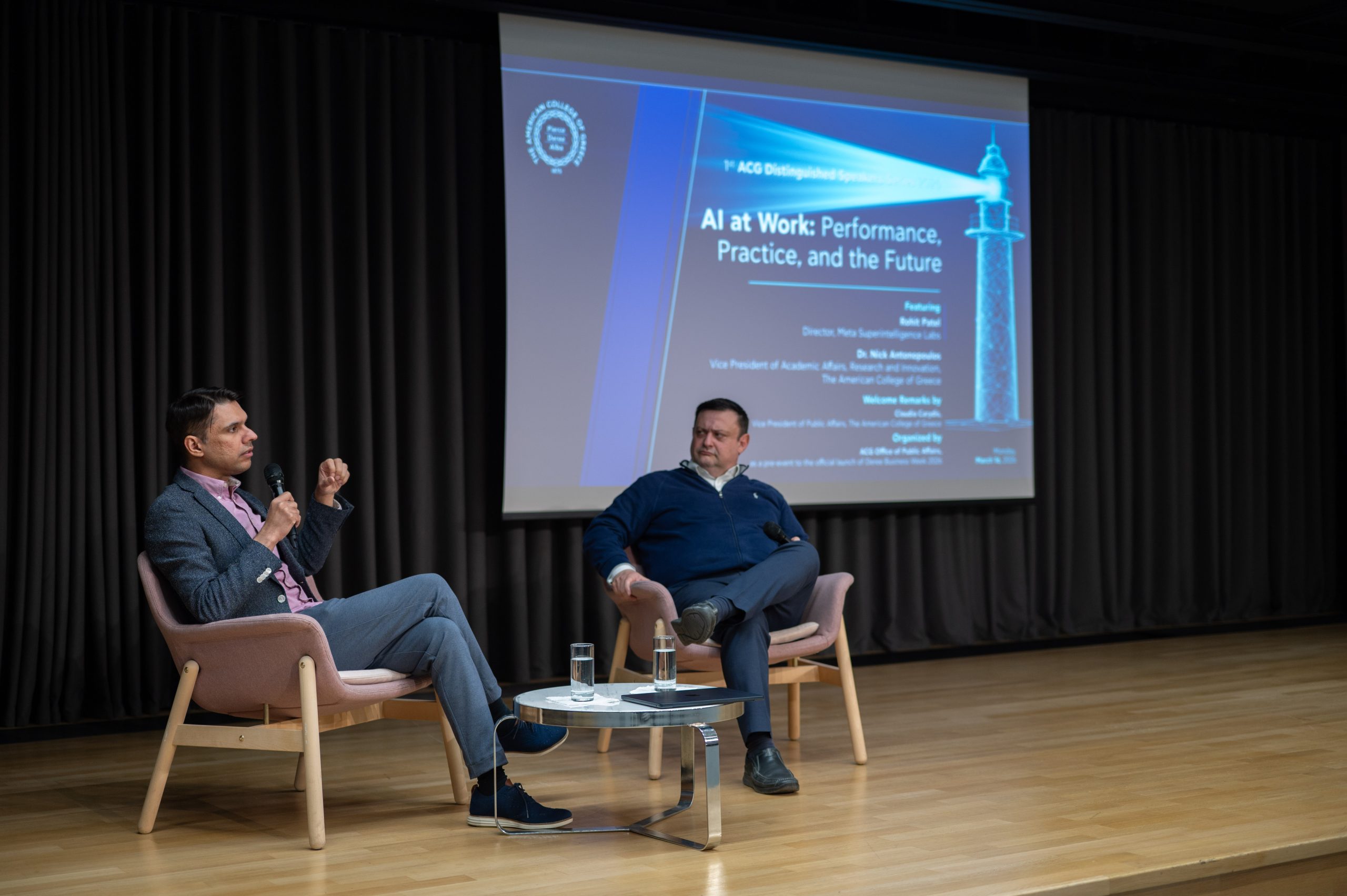
A central theme of the conversation was the challenge of evaluating AI. Unlike traditional software systems, AI models are non-deterministic: the same input can produce different outputs, and their capabilities vary widely across tasks. As Patel explained, this makes conventional testing methods insufficient. Instead, organizations rely on statistical evaluation frameworks—known as “evals”—that test AI systems across a range of scenarios and measure performance probabilistically. Increasingly, even AI itself is used to evaluate AI, enabling faster and more scalable assessment. This shift, Patel noted, has far-reaching implications. As AI becomes embedded in business processes, healthcare, and everyday decision-making, understanding how to measure its effectiveness will no longer be a technical concern alone, but a core organizational capability.
The conversation then turned to the impact of AI on jobs and skills. While public discourse often frames AI in terms of job displacement, Patel offered a more nuanced view: AI is currently far more effective at performing specific tasks than replacing entire roles. He illustrated this with a compelling analogy—comparing AI to a player who can replicate most movements on a football field but not the critical moments of judgment that define performance. The implication is not that jobs disappear, but that their structure changes.
In practice, this shift is already underway. Patel described how AI has transformed his own workflow, dramatically reducing time spent on routine implementation and allowing greater focus on system design, problem framing, and higher-level thinking. This reallocation of effort, he suggested, is likely to become the norm across industries, as professionals increasingly work alongside AI systems rather than independently of them.
Looking ahead, the discussion underscored the growing importance of AI literacy. As AI tools become integral to recruitment, operations, and decision-making, professionals will need to understand not only how to use them but also how to question, evaluate, and guide them effectively. The ability to work with AI—critically and strategically—is fast emerging as a foundational skill.
The event also highlighted ACG’s active engagement with AI innovation. Faculty and students participated in the EmTech Europe 2026 conference, curated by MIT Technology Review in association with Kathimerini, where they presented applied AI solutions developed at ACG, including projects such as Nimbus and ARIA—demonstrating how an academic institution can move toward becoming truly AI-first.
As the first event of the 2026 Distinguished Speakers Series, “AI at Work” set a clear direction for the year ahead: grounded, future-focused conversations that connect students with the ideas, technologies, and leaders shaping the world they are about to enter.