
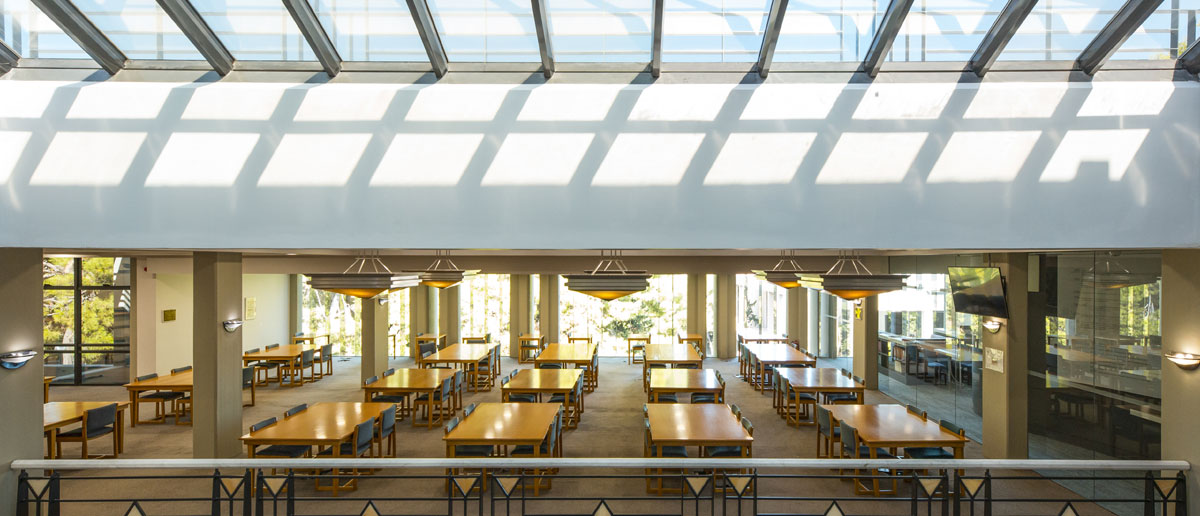
ACG-RC is a not-for-profit legal entity operating as a Research Center whose purpose is to perform research and explore innovation opportunities spanning a broad range of scientific areas: natural, social, and computational sciences, technology, education and communications, as well as the liberal and fine arts.
ACG-RC fosters a diverse range of research, learning and innovation-oriented activities, hosts researchers and scholars from different countries and backgrounds, participates in collaborative projects — such as research grants funded by various entities — and collaborates with an array of partners from the academic, research, industrial, non-governmental and other domains.
ACG-RC also serves as a vehicle for supporting funded research activities (such as European Commission-funded projects) involving the faculty members of ACG’s educational divisions, as well as the members and fellows of ACG’s Institutes, Centers of Excellence and other units.
Professor Athanasios Krystallis-Krontalis ([email protected]) is ACG-RC’s Director, overseeing its research and innovation activities.
EU-Funded Projects
MULTIPLY6G
MULTIPLY6G (Multidimensional wave and space – level optimization for energy-efficient communications and sensing) is a Research and Innovation Action funded by the European Smart Networks and Services Joint Undertaking (SNS JU) 6G SNS program, under Horizon Europe. Coordinated by Trinity College Dublin and with a Consortium of 8 academic and 6 industrial partners (including Vodafone and Ericsson), this project aims to develop advanced multidimensional waveform technologies, low-complexity extreme large arrays, and advanced spectrum sharing techniques in an Open Radio Access Network (O-RAN) framework. With these, it aims to address the 6G demands for immersive, hyper-reliable, ubiquitous and low-latency connectivity, together with dynamic sensing and AI-native capabilities across diverse and complex propagation environments.
The American College of Greece Research Center (ACG-RC) participates through the Research, Technology & Innovation Network (RTIN)’s Smart Wireless Future Technologies (SWiFT) Lab, led by Dr. Constantinos Papadias. Dr. Spyros Lavdas and Dr. Georgios Ropokis will oversee the work on advanced multi-antenna technologies and radio resource management, respectively.
MULTIPLY 6G is funded by the European Union under Horizon Europe, Grant Agreement No. 101293106, and will run from 1st June 2026 to 31st May 2029.
JUST-CIRCLE

JUST-CIRCLE (Measuring and Advancing Circular Business Models for a Fair and Sustainable Transition) is a Horizon Europe Innovation Action coordinated by Brunel University of London and will run from 1st June 2026 to 31st May 2029. The 14 partner institutions will join forces to design, test, and validate integrated frameworks for sustainability accounting, lifecycle impact assessment, and responsible circular business-model innovation that enable industry and social-economy actors to meet EU Green Deal/CEAP targets while strengthening competitiveness and user uptake. Methodologically, the project operates through three interlinked dimensions: (S) social adoption & just transition via co-creation with SMEs, social enterprises, workers, consumers and public buyers; (M) measurement, accounting & verification integrating EF-aligned LCA, SLCA and sustainability accounting with FAIR traceability; and (E) experimental co-design & ecosystem governance with large-scale field validation and toolkit development.
Activities are structured into six work packages: WP1 management/QA; WP2 CBM design and stakeholder co-creation; WP3 assessment tools and traceability; WP4 pilot implementation and validation across four contexts—agriculture/agro-industrial, waste-to- energy, food services, and circular water reuse; WP5 a GDPR/FAIR Digital Knowledge Hub with EU clustering (CCRI/NEB); and WP6 impact assessment, exploitation and policy/standardisation pathways. The work culminates in pilot evidence (e.g., D4.1–D4.3), interoperable methods and indicator sets (D3.1–D3.3), practitioner training (D3.4), a live Knowledge Hub (D5.3), and policy-ready impact and replication packages (D6.1–D6.4).
The American College of Greece Research Center (ACG-RC) research will be led by Dr. George Batsakis through the Research, Technology & Innovation Network (RTIN).
JUST-CIRCLE is funded by the European Union under Horizon Europe, Grant Agreement No. 101291392.
HORIZON EUROPE Project FUTOURWORK

The FUTOURWORK project is a 3.5-year, multi-national research initiative aiming to strengthen inclusive social dialogue within Europe’s tourism and hospitality sector. Coordinated by the University of Westminster and funded by Horizon Europe, the project brings together expertise from eight partners across six countries to address systemic challenges impacting 13 million workers within this critical economic sector. The American College of Greece Research Center (ACG-RC) participates through the ACG150 Center of Excellence in Food, Tourism and Leisure (CoEFTL), with the scientific leads being grant holder George Skourtis and co-coordinator Maria Vrasida. With a focus on inclusive dialogue, worker well-being, and fair policy, FUTOURWORK seeks to mitigate the adverse effects of precarious gig work, job insecurity, and labor inequality.
By engaging with diverse stakeholders—ranging from workers and employers to social dialogue organizations—FUTOURWORK will conduct in-depth research on sectoral best practices, challenges, and new policies required to foster fairness and resilience across the tourism and hospitality workforce. The project also examines the intersectional dynamics within these industries, focusing on supporting women, migrants, and youth, who form a large part of this workforce.
Key Objectives and Outputs
- Inclusive Social Dialogue: Facilitate meaningful engagement with workers, employers, and dialogue organizations through activities such as surveys, interviews, storytelling, and multi-stakeholder dialogues.
- Worker Well-being Index: Develop an industry benchmark to track worker satisfaction, safety, and inclusivity.
- Documentary and Storytelling Initiatives: Produce a documentary that documents the lived experiences of tourism and hospitality workers.
- Observatory Platform: Create a digital observatory to centralize information on worker rights and provide a collaborative forum for continued discussion among stakeholders.
HORIZON EUROPE Project EPIC-SHIFT

EPIC-SHIFT is a Horizon Europe-funded project that aims to deliver a new, independent, and robust foundation of knowledge on the environmental, economic, and social sustainability of novel foods derived from alternative protein sources (NFAP), offering innovative pathways for diversifying protein options in human diets. These proteins, derived from sources as diverse as insects, fungi, bacteria, algae, and agricultural by-products, represent a radical shift away from traditional animal-based diets. At its core, EPIC-SHIFT is driven by the imperative to combat the environmental and socio-economic strains caused by the current food systems while ensuring food equity and security.
Recognizing that different types of NFAP contribute uniquely to reshaping food systems, EPIC-SHIFT employs a quadruple helix innovation model through a collaborative, multi-actor approach to chart a sustainable development path for NFAP aligned with Planetary Health Diets. Functioning as a think-tank and guided by a Food Systems Thinking framework, the project will conduct a comprehensive impact assessment of seven NFAP types—spanning from protein sources to final products—at scale. This work will be complemented by actionable recommendations on food environments, marketing strategies, regulatory pathways, infrastructure needs, and investments essential for supporting sustainable long-term market growth.
Through integrated scenario analysis, EPIC-SHIFT will develop decision support tools to guide policies and strategic decision-making, enabling the sustainable incorporation of NFAP into EU diets. These tools will prioritize resource efficiency, food security, and nutrition while ensuring a just transition that benefits all actors within the food system.
Coordinated by Sweden’s Lund University, the project unites 20 partners from 14 countries in a three-year mission to investigate and promote NFAP. ACG-RC participates through the ACG150 Center of Excellence in Food, Tourism and Leisure (CoEFTL), led by Professor Athanasios Krystallis, Executive Director of the CoEFTL.
Interreg Euro-MED Project COOL NOONS

Morphing urban tourism into a more sustainable model is an urgent, yet, underestimated issue. COOL NOONS enters the picture to address this. The COOL NOONS project, funded by the Interreg Euro-MED initiative, aims to transform 5 pilot Mediterranean cities into more resilient and welcoming environments during the peak heat hours of the day. As global warming levels increase, so does the importance for cities to adapt to rising temperatures, especially in regions like the Mediterranean, where the summer heat can negatively impact both the quality of life for residents and the experience of tourists.
Throughout the project, 9 partners from 6 countries will test and promote innovative solutions to mitigate the negative effects of heat waves in 5 pilot cities across the Mediterranean; Budva (Montenegro), Dubrovnik (Croatia), Imola (Italy), Lisbon (Portugal), Marseille (France). Under the guidance of the University of Coimbra and The American College of Greece Research Centre (ACG-RC) through its Center of Excellence in Food, Tourism & Leisure (CoEFTL), COOL NOONS utilizes tools and methods that offer a combination of scientific accuracy, pragmatism, and creativity.
By introducing forward-thinking solutions, COOL NOONS seeks to enhance urban environments, renewing the tourism offer in Mediterranean cities for their climate change adaptation.
The ACG-RC Scientific Lead is Maria Vrasida.
ERASMUS+ project RISE
RISE (Rise Empowered Above Sexual Violence in Sports) is an Erasmus+ project aiming to address the issue of sexual violence in sports. RISE focuses on combating sexual violence within the realm of sports, taking a multi-pronged approach. It plans to formulate and advocate for a comprehensive framework consisting of policies, guidelines, and resources designed to prevent sexual violence. It also seeks to foster awareness, sensitivity, and knowledge among individuals and entities involved in sports and to equip them with the necessary tools and expertise to prevent instances of sexual violence effectively. Particular emphasis is placed on educating young individuals within the sports domain, particularly athletes, about sexual violence. Through a comprehensive strategy, it aims to empower the youth and protect them from the perils of sexual violence within the sports sphere. The RISE project is coordinated by Social Policy and Action Organization from Cyprus, in partnership with, besides ACG-RC, organizations from Austria, Bulgaria, Italy and Spain. ACG-RC participates through the ACG150 Center of Excellence in Food, Tourism and Leisureled by Professor Athanasios Krystallis, Executive Director of the CoEFTL, whereas the scientific lead on the side of ACG-RC is Dr. Tatiana Chalkidou, Department Head of Tourism, Hospitality and Sports. Other members of the scientific team include Dr. Ritsa Ventouratou, Dr. Chrisanthi Nega, Dr. Stella Leivadi and Ioanna Mitropoulou. The project was formally kicked off in Cyprus on Nov. 26, 2023. For more information, please see https://en.bulsport.bg/projects_en/RISE_EN/view?nwid=44254.
Horizon Europe project ISLANDS
ISLANDS (Integrated Sensing and Communications for future vehicuLAr environments – a Network of Doctoral Students) is a Horizon Europe project funded by the European Commission as a Doctoral Network under the Marie Skłodowska-Curie Actions (MSCA) program. The ISLANDS Doctoral Network, with a total budget of 2.7M€, will recruit, train and supervise 11 doctoral students who will pursue their PhD degrees on research topics related to the emerging area of integrated sensing and communications, which bridges the fields of wireless communications and radar. The envisioned applications will target the vehicular and automotive domains. The network comprises 8 beneficiary partners (4 academic and 4 industrial), as well as 12 associated partners that come from the European Union, the UK, the US, Israel and China. ACG-RC participates as a beneficiary partner through the Smart Wireless Future Technologies (SWiFT) Lab. Professor Constantinos Papadias will be the project’s Technical Coordinator. The project will start formally on Jan. 1, 2024.
CoEFTL qualified to run Consumer Engagement Labs in Greece for 2nd year in a row

At a recent EIT Food Call, the ACG-RC / CoEFTL (CoE Food, Tourism & Leisure) was qualified to run for a second consecutive year the Consumer Engagement Labs (CEL) in Greece for 2023. EIT Food CEL is the largest food co-creation initiative in Europe, funded by Horizon Europe framework program. In 2019-2022, the co-creation processes involved 82 consumer panels and 43 companies from 16 European countries, who worked together to design, develop and introduce to the market 22 innovative food products.
In 2023-2025, the methodology will be applied to societal challenges linked to targeted nutrition and protein diversification. Labs in Greece will be implemented by the CoEFTL and the leading food company E. J. Papadopoulos, aiming to develop and introduce to the Greek market food products that address a specific societal challenge. The co-creation approach of the Labs will be conducted by Dr. Chrysanthi Nega and Dr. Chryssoula Karakitsou, faculty of the Deree Department of Psychology, with the support of student scholars and the scientific coordination of Dr. Toula Perrea. The Greek consortium (ACG-RC/CoEFTL & E. J Papadopoulos) are awarded the amount of € 31,250 for organizing the CELs.
Horizon Europe Project LIKE-A-PRO

LIKE-A-PRO is a collaborative innovation action project funded by the European Commission’s Horizon Europe program (under grant agreement # 101083961). The project started on Nov. 1, 2022, and will last for four years. It is coordinated by CTIC CITA in Spain and brings together key representatives along the entire alternative edible protein value chain (protein producers, ingredient & product developers, culinary centers, food clusters), scientists and market & communication experts and European consumers in a cross-disciplinary consortium (42 entities in 17 countries). ACG-RC participates through the ACG150 Center of Excellence in Food, Tourism and Leisure (CoEFTL), led by Prof. Athanasios Krystallis, Executive Director of the CoEFTL. ACG-RC will be responsible for the organization of a “Living Lab” on its premises, whereby consumers will have the chance to test and evaluate several food recipes based on alternative proteins. More information about the project can be found here.
ERASMUS+ project REFOCUS
REFOCUS (REthinking and FOstering Competence and skills for sUstainable transport, Shipping, and logistics) is an Erasmus+ project, funded under Key Action 2 (Cooperation Among Organizations and Institutions), and specifically, Call 2022 on Cooperation partnerships in higher education (KA220-HED). The project aims at developing student-centered educational material in the transport, shipping and logistics sectors, focusing on the environmental protection and fight against climate change while enhancing inclusion and diversity of students. As such, REFOCUS will target University dropouts, people located in isolated rural/island areas, as well as students belonging to disadvantaged groups with an interest in transport, shipping and logistics sectors in order to assist them in building skills. The project will engage an innovative, engaging design-thinking approach to develop a future-oriented curriculum and new training material for transport, shipping and logistics that will lead to a micro-credential (certificate). REFOCUS is coordinated by the University of the Aegean and comprises, besides ACG-RC, the University of Antwerp in Belgium, Cambiamo Sociedad Cooperativa Madrilena in Spain, Andaira in Spain, and Delft University of Technology in The Netherlands. ACG-RC participates through the ACG150 Center of Excellence in Logistics, Shipping, and Transportation (CoELST), led by Prof. George Kokosalakis, Executive Director of the CoELST, whereas the Scientific Lead on the side of ACG-RC is Prof. Athena Tsirimpa, CoELST Fellow.
ERASMUS+ project SDG4U
SDG4U (Engaging SDGs for Transformative Education and Enhanced Sustainability in Universities) is an Erasmus+ project, funded under Key Action 2 (Cooperation Among Organizations and Institutions), and specifically, Call 2022 on Cooperation partnerships in higher education (KA220-HED). A main priority of the project is to stimulate innovative learning and teaching practices through engaging SDGs for transformative education, which lead to enhanced sustainability in universities at all levels. The project is coordinated by the National and Kapodistrian University of Athens (NKUA) and comprises, besides ACG-RC, the Panteion University in Greece, the University of Murcia in Spain, the University of Cork in Ireland and UniMed in Italy. The participation of ACG-RC is coordinated by the ACG150 Center of Excellence in Sustainability (CoES), led by Prof. Stella Apostolaki, Executive Director of the CoES.
EIT Food RIS Consumer Engagement Labs 2022
The EIT Food RIS Consumer Engagement Labs are pre-competitive co-creation sessions carried out by a group of consumers (selected based on specific segmentation criteria) in a joint place and limited in time, focused on ideation and development of new product concepts. They operate under the European Institute of Technology (EIT) Regional Innovation Scheme (RIS), which was introduced in 2014 in order to boost the innovation performance of countries with moderate or modest innovation scores as defined by the European Innovation Scoreboard. The RIS is steered by the EIT and implemented through the EIT’s Knowledge and Innovation Communities (KICs). The activity contributes to the implementation of the EIT Food RIS Strategy, Action Line 2, by strengthening the innovative ecosystems of targeted EIT RIS countries. In 2022, EIT Food joined forces with EIT Climate-KIC, EIT Manufacturing, and EIT Urban Mobility in a joint initiative aimed at bolstering collaboration and enhancing the circular economy approach in the region. ACG-RC has participated, since June 2022, through the ACG150 Center of Excellence in Food, Tourism and Leisure (CoEFTL ), led by Prof. Athanasios Krystallis and implemented by Dr. Toula Perrea, member of the CoEFTL. More information can be found here.
Other Projects
‘Seasons of Belonging: Hydra and Kerkyra Beyond Tourism’
1/4-31/7/2026
‘Seasons of Belonging’ capitalizes on the investment and work that produced the digital exhibition Imagining Greece: How Tourism Shaped a Nation, by using it to inspire local communities in Hydra and Kerkyra to consider how their islands’ annual life cycles are affected by reliance on tourism and, in particular, how they experience the off-season. This successor project stands out because, while most existing academic and public interest focuses on over-tourism in Greece – the problems of excessive visitors, overcrowding, and environmental pressures – Seasons of Belonging instead explores a different but complementary story: the absence of tourists and what that means for community life. With Sheffield University and the National Archaeological Museum of Greece as partners, the ACG-RC research team led by Professor Eirini Karamouzi will use the physical exhibition of Imagining Greece in Hydra and Kerkyra from March 2026 to October 2027 as a participatory platform to engage with residents in order to capture their perspectives and give residents of different generations a means to contemplate connections between their social and cultural history, their lives, and the effects of heritage-making and tourism upon their islands. It will ask residents how they experience and narrate belonging in the off-season; what cultural practices, coping strategies, and memories sustain community life when tourism disappears, and how these residents’ narratives reshape understandings of heritage, identity, tourism, and sustainability in island societies.
Funding Agency: Research England
Benchmark Study on how Greek businesses integrate children’s rights into their operations, and how they manage activities that affect children’s well-being
The primary objective of the project ‘Benchmark Study on how Greek businesses integrate children’s rights into their operations, and how they manage activities that affect children’s well-being’ is to implement a system that examines corporate performance across two key dimensions of children’s rights engagement:
- Corporate Irresponsibility (Risk and Harm Assessment): This pillar focuses on measuring business operations that directly or indirectly harm children or violate their fundamental rights.
- Corporate Responsibility (Positive Impact and Benefits): This pillar evaluates proactive initiatives that companies operating in Greece adopt to promote children’s rights.
The study design employs a sophisticated mixed methods approach that strategically combines qualitative and quantitative research techniques to generate both depth and breadth of understanding regarding corporate children’s rights practices in Greece.
The role of the Diaspora in the Greek-American relations, 1974-2024
The project investigates the role of the Greek-American diaspora in Greece–U.S. relations over the past fifty years (1974–2024). It explores a critical but largely overlooked dimension of bilateral relations: the influence of the Greek diaspora community in the United States. The study focuses on three interrelated aspects: (a) the impact of the Greek-American community on Greece’s political and social developments, (b) its contribution to the shaping of Greek foreign policy, and (c) Greece’s evolving stance toward its diaspora in the United States.